Showing posts with label writing. Show all posts

Friday, February 19, 2016

Vice Party - The Good, the Bad and the Nearly Useless

I don't get to indulge many vices, more's the pity. When it comes to the buffet of vices, I still sit at the kiddy table. Alcohol, which I used to enjoy (Lemon Drop anyone?) now equals migraine. Chocolate, too. The list of fun things that end badly for me is long and sad. Since I can't consume vices, I spew them instead. And still, they turn in service to writing.

1. Swearing is my vocation. It's a calling, a sacred duty to which I am devoted. Since the public rooms of the bordello strive to appear slightly family friendly, I curb my colorful language. Meet me in a public situation one or two times and you'll have no idea of the vast, simmering cesspool of language underlying my polite facade. Hang around long enough to lull me into a sense of safety, though, and that pool will bubble over. Most of my friends still look surprised when a word or phrase slips out. Many of them giggle, too. Does it help me while I'm writing? Probably. If only to give me the ammunition to complain in grotesque detail about how a story is or isn't coming together.

2. Analyzing. I have a degree in overthinking. It is a hindrance part of the time. The other part of the time, I'm making it work for me. Everything I watch, read or experience gets vivisected - how did the story go together? Did the conflict work? If no, why not? If yes, why? What would make a poor plot work? How could things have been changed. This is all part and parcel of peering beneath the hood to learn how something runs (or doesn't) so I can build my own.

3. Companion to that: I talk too much. No one wants to watch The Walking Dead with me anymore. I usually see within the first several minutes of an episode how it will end, and often, within the first episode or two, I can tell how a season will end. These are the wages of analyzing stories as a mode of living. Sure, sure, I learned long ago to not volunteer the spoilers. I may be slow, but I can be taught. Still, my TWD friends and family keep casting sidelong glances my way during a show. Finally someone will ask if I have it figured out. There's a second of silence when I shrug and nod. One of them will grin and say, "What's your theory?" I blab. Everyone laughs and blows me off. Until the end of the episode/season. How does this help my writing? It's concrete evidence that I've managed to learn valuable lessons about conflict and story arc - not just as an intellectual exercise. They're internalized. Keith likes to talk through movies and TV shows we've watched. Mostly, I think, he likes getting to geek out about a show with me. But tonight, while reading on his Kindle, he turned to me and said, "You know I can't read some of these books now without remembering what you've said about stories. About how there has to be both internal and external conflict that comes from who the characters are before a story really starts to resonate. You turned me into a tea snob over the years and now you're turning me into a story snob. A few scantily clad women and a couple of explosions used to be enough." High praise. I'm going to let this help me stop worrying about whether or not I'm doing it right. I'm just going to write and trust that conflict and plot will take care of itself.

4. The occasional bag of sour cream and onion potato chips because some times, you just need to grind the bones of your demons between your teeth. They taste salty. Like my writer tears. Or the blood of the innocents sacrificed to the gods of word count.

Friday, November 6, 2015

Mapping Your Progress

Let's pretend you want to drive from the east coast of the US to the west coast. And you don't want to leave a mote of rubber on a freeway anywhere on that epic journey. Chances are pretty good you're going to need to have a good look at a map. Unless you're into hopping in the car, getting on whatever old road without knowing where the gas stations and rest stops are so that you end up dead in a swampy ditch somewhere. To get from sea to shining sea without ending up in your own personal Deliverance reenactment, you're going to need a plan. A map. A course plotted and laid out so you can follow it or deviate from it based on conscious decision, not happenstance.

Writing is the same. The path between the beginning and the end is fraught with peril, scenic byways, speeding freeways, and crumbling back roads choked with alligators. Unless you have a goal, you're venturing forth into the country of your storytelling without a map. You can't get where you want to go if you don't know where you're going in the first place. Someone said that, I'm sure. It was probably pithier before I got hold of it, too. Okay. So you need a goal. Fine, you say. Goal = write the thing. Now what?

Now you map out a route. Whether it's via an outline, a plot sketch, a synopsis, or a loosely held notion of A happens, then B, then C, you must be the GPS for your story. Our destination lies yonder, therefore, we will get there via this plot twist over here. We'll stop and stare into the abyss at this point before pitching the characters off the metaphorical story cliff. Yay!

Then. Then you have to drive.

Until someone invents that teleporter, or a room full of monkeys spontaneously generates Shakespeare, the only way from beginning to end is to put in the hours - whether driving or writing. Here's the thing. On the west coast, if I want to get from Seattle to LA, I can take I-5 or I can take 101 down the coast. 101 is gorgeous. And winding and slow and jammed with logging trucks and motorhomes. It takes days. I-5 is FAST. And some of the brownest, flattest, ugliest stretch of freeway available in the United States. Some days, it's worth going fast. Some days, it's not. Stories are the same way.

 
YOU pick the route. You pick your sights. If you're writing, and you aren't having fun, why are you doing it? Change course. Go faster. Or, if you're going fast, get off the freeway and take the coastal road. Slow down and take in the metaphorical sights of your story.

Your journey is just as important as your destination. Enjoy it. If you aren't enjoying it, change it until you are. Reaching your goals is a lot easier when you're having a good time.

AM Update: You know what? There's more to this. Look. You know how to set goals. We all do. Sure, sure. If you need help setting realistic goals, Google that. The techniques for SMART goals are all over the interwebs. Avail yourself of them. But when it comes to making tracks, to actually doing the work, there are a couple of tricks you can use.
1. Immersion - keep your head in the story. When you close your eyes at night, put yourself in the story where you last left your heroes and play through scenarios until one tickles your fancy. Keep a notepad beside the bed.
2. Front load the work - at the end of each writing session, I take a few long hand notes about where the story wants or needs to go next. There may be notes about a scene I missed and want to add. Whatever.
3. Treat the writing and yourself seriously. When you sit down to write, clock in. Keep a notepad, spreadsheet, or whatever works for you. Write down when you start writing. Not when you turn on the PC and start surfing FB. When you start writing. Every time you lose focus and stop writing, jot down the time and your word count. Note what distracted you. 'Need tea', 'bio break'. Take 5. Then sit back down. Write down the time and get back to work. You're developing a data set about what bumps you out of the work so you can tweak your environment to support your focus.
4. If you get stuck it's because you don't have a plan/don't know where you're going. Take 10 minutes and free flow with pen and paper on what could happen next in your story.

There are more, but these are the start of 'how to keep to word count per day' goals.

Sunday, June 28, 2015

Five Reasons to Keep Writing

The cholla are starting to come into bloom here. Love seeing the desert pop with the pink and yellow.

So, last week we all did our best to talk ourselves out of writing. Some of the posts were pretty damn funny, too. I particularly liked Linda's and Marcella's.

But what are good reasons to keep writing? Here are mine.

1. Simple logic: continuing to write = producing stories

Okay, it's not a guarantee. But this is kind of like proving a hypothesis. I can be certain of the reverse - if I don't write, then there are no stories. Also, one of those most brilliant aspects of writing - maybe of creativity in general, I don't know - is that the more you do, the more there is. Writing more means I'm able to write more easily. That's the number one reason to write. Writing is an act that opens the gates. Getting that flow is one of the best feelings in the world. Maybe the flow won't happen. It doesn't every time. But it *definitely* won't flow without the act of writing in the first place.

2. Excuse to stalk authors

I've said this before, but one of the best perks of being an author is getting to be friends with people who write the books you love as a reader. The friendships I have with other authors are some of the best ones of my life. Having published books gives you a pass that changes creepy stalking into a professional exchange. Of course, having published books only happens if you keep writing. See #1.

3. Tax-deductible books, free books, early books

 Did I mention books?? Yes, I deduct all of the money I spend on books. I'd buy them anyway, but being an author transforms book buying from indulgence to professional research. It's one of the best gigs ever. Also, my friends give me their books. We trade. If I want to read the next book in a favorite series early, I need only ask. It's amazing and my bookworm younger self have never quite gotten over how sweet it is.

4. Reduced chance of insanity

Writing might make me feel crazy in some ways and at some times. (See last week's post.) But not writing absolutely makes me feel crazy. I can feel it creeping in when I take a break. There's an ideal space of time in there. I take a break between books or revisions, to allow the well to refill. It helps to do this, but I have to do this judiciously. Too long and it's hard to get the flow going again. (See #1.) Worse, once the well has refilled, it begins to overflow, which means I feel like I'm filling up with this stuff that has nowhere to go. I become bloated and stagnant with it. It feels like depression. It might end up there if I let it go too long.

5. Best freaking job in the world

Seriously. It might not be the easiest way to make money. Certainly many writers may never make a whole lot of money. But I find it pretty awesome that I can get paid to write stories. I get to write what I love, play around with ideas and characters, romp through worlds that I create and make be exactly how I want them to be. AND I get money for this??

BEST FREAKING JOB IN THE WORLD!

Sunday, June 21, 2015

The Poor Pessimist's Guide to Not Writing

I'm not much good at being a pessimist.

Seriously. It's not that I'm a rose-colored glasses person (actually, maybe I am...), but I'm blessed to have optimistic body chemistry. Happy is my default emotional state. In college, I was a peer counselor, which involved pretty intensive training over ten weeks, with a full Saturday devoted to particular topics. For suicide, we were all assigned to think about what in our own selves would drive us to contemplate doing that. It dovetailed with an acting class assignment to perform a solo scene without words. So I created a scene of a woman committing suicide with pills. (I used pine nuts and the flavor of those still reminds me of that sense of despair I created.) It was incredibly difficult for me to get to that place.

As I recall, my acting teacher thought I didn't quite manage. LOL! Of course, there are a number of reasons I'm a writer, not an actress.

ANYWAY. This week's topic in the bordello is The Pessimist's Top 5 Reasons to Never Write. As a failed pessimist, here's my stab at it.

  1.  The persistent fear that the next book will be the one that sucks

    I can't shake this one. Is it just me? I'm forever worrying that the book I'm writing will be terrible. I also fret that ones that are out are actually terrible - no matter the praise - and that people aren't telling me the truth. I'm not like this about anything else in my life.
  2. The daily dread that I won't make wordcount

    This one is rich. Every day I start writing with the fear that I won't hit my planned number of words. Sometimes I procrastinate on starting, because I'm afraid the words won't flow. Crazy.
  3.  I could make money more easily in other ways

    Right? Making money as a writer is not easy. It takes a long time and is never a sure thing. And, if I think too much about making money, that gets in the way of the story. I still make much more money at my day job and it's not nearly as difficult. For example, I never worry that my next report to the EPA will be the one that sucks. :-)
  4.  I'll never write a book as good as...

    [Insert name of much-loved book here]
  5.  It gets in the way of my reading

    One of the sad truths of writing is it takes away from reading - both in time and pure enjoyment. It's difficult now to divorce my writer's brain when I'm reading and I'm much pickier about books now than I used to be. Alas. Also, the books really pile up these days (see last week's post.)
So, much like I associate suicidal despair with the taste of pine nuts, writing this now has me thinking about all of the craziness that comes with being a writer. I suspect the take-home message here is that not one of these things would exist if I didn't care so passionately and deeply about books and writing. That's what it comes down to for me. My day job is a job - one I enjoy and believe in
- but being a writer is... being alive. Which is why I write despite all of these neurotic fears.

Maybe, in some ways, I write BECAUSE of them. Next week will be the optimist's turn. Much more my natural habitat. :-)

Also...

I've been over at Harlequin Junkie, with an interview and giveaway. I asked readers to comment on what posts topics they like to see from authors. The answers are pretty illuminating! One thing a number of them mentioned is teasers from work in progress. Which I never do. So, I'm testing the theory and I challenge the other Word Whores to do so! Here's a little teaser from book 4 of The Twelve Kingdoms, THE PAGES OF THE MIND.

*******


The ladies oohed, put the last touches on her hair and the subtle makeup Ursula had agreed to, and bowed out to take their places in the hall. Ursula remained still for a moment longer, a somber expression on her face as she studied herself in the mirror, making me wonder what she saw there.
“Nervous?” Harlan asked her, before I could, which meant he earned the glare instead.
“I’m having a big piece of jewelry stuck on my head,” she retorted. “What’s to be nervous about?”


Friday, June 12, 2015

Confluence of Disaster: What Must Be Done Versus What I Want To Do

Some people have orderly lives.

I am not one of them.

It happens, all too often, that Real Life laughs in the face of my writing ambitions. It's happening now, as a matter of fact. I am THIS close to finishing a draft of a manuscript. I've got "The End" by the tail and I desperately want to catch that damned elusive beast.

But.

Tarot clients to read for. A crit partner who needs a read of a manuscript in short order because she has an actual contract. A chronically ill feline requiring extra care - you know. Life. This is also the weekend randomly selected for the garage sale that is meant to divest us of our last earthly possessions - the ones that we kept around for that off chance that we'd ever move off the boat and back to earth. Lots of stuff. Come one down. There's even a Harley Davidson Sportster for sale. Special for you, Saturday. While all of this is happening, you can bet I won't be making word count.

What to do?

Write in the cracks. Keep pen and paper, or a voice recorder (the IPhone has a good one) or some other means of jotting down notes, ideas, snippets of dialogue, flashes of 'Oh! I know!' brilliance. You want something that has to boot time. Instant on. No batteries to be dead. You'll scribble notes in the rare down moments between one client call and the next. Or you'll voice record a clever dialogue bit while idling at a stop light. So long as that's legal in your state. There's no scene writing unless you find you have an extended wait for something (doctor's waiting rooms are good for this). The point is to scribble scene notes so that when you return to your keyboard for the real thing you can hit the ground running. This story shorthand serves to keep me immersed in a story even when I can't make major strides in pursuing it. It keeps me thinking about the characters and the conflict - keeps my head in the game, so to speak. That way, when Real Life untwists her knickers and lightens up, I don't lose a day going over what's already written to remind myself of where I left off and who these people are.

I've mentioned my other strategy before, too, but it bears repeating. Orders of precedence. This entails ranking things in orders of importance. When Real Life is cranky with me, mine looks like this.

1. Keep myself alive.
2. Keep husband alive.
3. Keep felines alive.
4. All other living things relying upon me for sustenance kept alive.
5. Day job because it enables number six
6. Bills paid and food acquired.
7. Writing.
8. Everything else on earth can wait unless they rise to the point of threatening well-being (that old container of sour cream at the back of the fridge develops sentience and begins making demands) or getting someone arrested (there does come a point with the laundry...)

I would strongly prefer that none of this was necessary - that life unfolded in an orderly fashion with little to no drama. I'd like an organized life. It may be that my priorities are the issue. It may be that I'm simply not wired for well laid plans. But if I don't write, I become crazy. And not in a fun way. So I adapt to grab what writing bits I can steal from any given day. Perfect? Not at all. But necessary.

Sunday, April 12, 2015

Three Ways to Add an Important Character: the Environment

When I first nursed the fragile and unlikely idea of becoming a writer, I took a class called "Essays on Self and Place." It was taught by a visiting writer at the university where I was a grad student in Neurophysiology. In other words, I felt both brave and... I'm trying to think of the right description. Not afraid so much as kind of a fraud. I didn't have any good reason to think I could make a career as a writer instead of as a scientist, as I'd planned and invested in. And I felt like every-other person I mentioned the idea to replied that, oh yes, they wanted to be a writer, too!

It's a difficult transition to make, so to all of you out there contemplating taking that step, I get it.

At any rate, I took that class with that writer mostly because of timing. I wanted to get going on seeing if I could be a writer, the evening class fit my schedule, was open to people outside the department and degree program - and sounded interesting. So much serendipity smiled on that choice.

I think I've always been strongly connected to my environment. My interest in science grew out of a love for the natural world. Where I live is vitally important to me - so much so that it took me a long time to get that not everyone felt the same way. This course, where we focused on writing about our connections to place and how they shaped us, crystallized that for me. My first published works - essays, naturally - came out of that class. Amazingly fast, too, which came as incredibly important validation for that step.

Though I've moved into writing fiction now, place still plays a vital role in my work. Sometimes deliberately - the City of New Orleans is pretty much another character in Ruby, something many readers love about that story - but place also plays a role in the world-building in my fantasy books too. At a booksigning, a reader asked me about my academic background and when I explained my crooked path from biology to fiction-writing, he nodded and said that explained so much about why my Twelve Kingdoms environment feels so intricate and real.

Which is terribly cool!

So, how to make the environment be a character? Here are three ways to start:

Pick a Place

This might seem like a no-brainer, but the place in which a story occurs is a vitally important decision. It should be more than whether this is a city or the country. If a city, how old is it? What kind of people live there? Is it coastal or land-locked? Think about how the humidity rises and falls, what kinds of storms the area experiences (see below). Even in city environments, there is wildlife, if only rats and pigeons. In rural areas, other kinds of animals might come in, particularly if looking for food because of other forces of nature like drought or a bad winter. The more detail of this sort (which doesn't all have to be on the page, see this post), the more vivid the place will be.

Know the Weather

The weather should be more than the cliché dark and stormy night. Place is profoundly impacted by how variable or steady the weather is. Is it usually cloudy and rainy like the Pacific Northwest? Is it a sunny desert? How does the changing weather - or lack of change - affect the moods of the people living there? In The Mark of the Tala and The Tears of the Rose, some of the action takes place at Windroven, a castle built on a dormant volcano on the coast. The storms and tides of that place play a role in what happens - for example, in a siege situation.

Be Aware of the Sun(s) and Moon(s)

The length of the day and night can affect what the characters can and can't do. Beyond what season it is, be aware of how early or late the sun rises and sets. What is the moon cycle? If not on earth, how do perhaps multiple moonrises affect the amount of light? A night with a full moon is very different than one with at the dark of the moon. Are the sunsets spectacular or always behind wall of fog? These things can be backdrops for scenes that help set the mood and influence the characters decisions.

Obviously this is a big topic, but there's some places to start. What details about place do you like to see in books? What's an example of a book you love where the environment feels like another character?

Sunday, April 5, 2015

Time in a Novel: What Should Your Scale Be?

https://rtconvention.com/event/scrapbooking-mania-0
Tis the season to be gearing up for the RT Convention! This is just one of the fun reader parties I'm participating in.
So, our Bordello Topic of the Week is 3 Hours, 3 Days, or 300 Years: How Do You Choose & Use The Passage of Time?

As always, that "choose" word amuses me. I like it though. I envision myself gazing into a fire thoughtfully, perhaps wearing a cardigan with leather patches on the elbows and with a notepad on the table beside me, next to the snifter of brandy. I frown as I contemplate the timeline of the novel I'm working up, envisioning the sweep of the story, how many days or years it should take to play out and.... Who am I kidding?

This is so not me.

So far, every single time I thought I was going for a long timescale, it hasn't happened. For example, The on-screen events of the three Twelve Kingdoms books (so far) take place over the course of just over a year. A jam-packed year, for sure. When I proposed the books? I envisioned them being something like ten years maybe. Now I'm adding two more books to the series and I might make it another year into the arc. We'll see. But again - who am I kidding?

I'm a fine-scale writer. Probably because I'm a character-driven writer and I love to focus in on detailed conversations and slow-burn epiphanies. I love to have that stuff on the page and to linger over it. Because that's the trade-off - if you want a larger time-scale, more stuff has to happen off-screen. It's a necessary sacrifice. I recently read a book that I loved, loved, loved - and yet, a number of events happened off-screen that I felt cheated by missing. I *wanted* to live those moments. In that case, I think the author could have made the choice to include some and I'm not sure why she didn't.

In other cases, it's not so much of a sacrifice to lose the boring, daily stuff. Much as I love Jacqueline Carey, she once dragged me through innumerable pages of a long, excruciating journey through monsoon rains. Yes, she made me live the misery and it's obviously stamped indelibly into my brain. But... really, Jacqueline?

I suppose that timescale of the story is ultimately a tradeoff between velocity of the plot and believable character development. In romance, in particular, the worst transgression of this kind is the "insta-love." In fantasy... could be the too-easily resolved defeat of the hero? I dunno. What do you all think?

Sunday, January 4, 2015

Dreaming Up Novels

I took this photo in Vieques, an island in the Caribbean, off Puerto Rico. It's an infinity-edge pool with the ocean beyond. I use it a lot on my desk top, etc., because it puts me in a good frame of mind - relaxed and peaceful, just as I'd be, sitting in that place.

State of mind is hugely important, I believe. Recently a (very successful) writer friend of mine asked me about my writing process. She's much more famous and sells FAR more books, but she envies the critical acclaim my books have received. (I told her to console herself with her millions of fans and piles of money, but she only laughed and persisted.) In truth, her process hasn't been working well for her, because she keeps getting slammed hard against her deadlines. Though she outlines *extensively* the last few books have gotten harder and harder to write. I suggested that she try writing the next book without an outline. Take a month and write for discovery like I do. She asked how I do that - how I hold the story in my head without an outline.

Which is hard to explain.

Except that it puts me in mind of this article on the virtues of daydreaming. I've saved this for a couple of years as a reminder to myself that daydreaming is good. It's one of any number of studies that show that daydreaming - idle mental time - promotes creativity. I need the reminder because my childhood programming, the corporate culture I work in and other influences, such as rigorous martial arts training I engaged in for over a decade, all told me that daydreaming is bad. I'm meant to be engaged in the conversation of the people around me, not staring off into space. I'm supposed to pay attention on those conference calls and in meetings. I should be alert and aware at all times, not dreaming of other things.

One thing that martial arts training gave me as a lasting lesson, however, is that cultivating mental quiet is good for more than being aware of my environment so I can anticipate attack. Mental quiet also allows me to hold the story in my head. In the right time and place, allowing myself to fall into a daydream state - or the DreamThink, I've called it in the past - lets me spin those stories.

Our question this week is whether we cultivate daydreaming to come up with our books and, if so, how we guide or direct that.

When I wake up in the middle of the night, I don't worry about it. I don't get up as the sleep specialists say to do. Instead I snuggle in and daydream about the book I'm writing. I do try to guide my DreamThink to whatever I'm working on, but I don't insist on it if another story edges in. I try to be peaceful about it and let my mind drift. If I start thinking about worries or daily cares and lists, that's no good, so I redirect myself back to the fantasy.

Sometimes I wake up early, an hour or so before the alarm, and that's terrific DreamThink time, as I can cook the story right before I get up and write. Sometimes I fall asleep and actually dream. Other times I drift in that perfect twilight state where I'm completely relaxed and cozy and my mind simply floats.

During the day I might daydream. I love gardening for this and other kinds of manual labor. Listening to audio books can induce this state. Something in the story I'm listening to might trigger me and I'll start dreaming about my own story. Then I have to back up, because I stopped listening.

In all of this, I think the key is not to censure myself. I'm a writer, so I pull that card now if someone accuses me of zoning out on the conversation. I just give a brilliant smile and say, sorry, started thinking about my book. This carries FAR more cachet than my childhood rep for dreaminess did. At work, I've realized everyone forgets to pay attention to every nuance of the meeting or call. Maybe it helps to be middle-management now, but I have no shame in asking someone to repeat the question. As for the martial demands that I be alert and aware... let's just say that I write books MUCH more often than I fight off attackers. And that there's a time and place for everything.

The final piece of being careful not to censure myself is to let the daydreaming flow as it wants to. This is a part of myself not bound by rules. When I write, when I edit, then I can impose structure and refinements. For the DreamThink, I give myself permission to go anywhere I like. To be awake or to sleep or be somewhere in between. To dream about what I'm working on or something else entirely. It's all part of the same stew and nothing is ever lost. It's like the primordial ocean, rich, full of life and endless productive.

What do you all think - do you use your daydreaming like this?

(OH! Also, I’ll be teaching a workshop that starts tomorrow, January 5. It’s for Outreach International Romance Writers on Sex as a Tool for Character Transformation. Non-members can register here up through the 5th. (As far as *I* am concerned, you can sign-up anytime, but OIRWA might not feel the same way…))

Friday, January 2, 2015

New Year Resolutions Writer Style

Welcome to the second day of the New Year. Hopefully, the hangover has worn off by now and you're staring at the list of resolutions you scribbled whilst judgment impaired by the adult beverage of your choice. Yeah, I don't (can't) drink, either, but work with me. I need an excuse for looking askance today at the unreasonable promises I made yesterday. The first item on my list: Move to Hawaii. Lovely thought. It misses a really vital step: Win the lottery. Because that is the only way I'd be able to afford a move to the islands. The second item on the list: Learn to love the cold is just laughable. A couple of years in Iceland when I was a kid cured me of cold forever. All I do is whine. Is it too much to ask to live someplace where making contact with the toilet seat isn't akin to planting my tender butt on a block of ice? It's 21 degrees outside and one of the radiators died a cowardly death. It has yet to be replaced because who wants to go outside in this nonsense? Which brings me to my next resolution: Go cold turkey on complaining. Yeah. Banner start to the resolutions.

Kidding. Don't do resolutions. I prefer goals. Minor difference of semantics, maybe, but resolutions seem so absolute. Goals get broken down into actionable steps. And when we talk about how my writing will change over the coming year, I can talk about how I aim for deeper POV, characters who follow you around your house for days after you read their stories, and maybe even a little angst, they're goals I really can't measure or control - they're a learning process that will take whatever time they're going to take. What I can control are these:

1. Finish what I start. No. You don't understand. This is a serious thing for me. I started five things this year. I finished two. Wait. No. I started eight things this year. Finished two. Sure. Those two things were novels. But seriously. That start/finish ratio? MUST get better. (The measureable goal: The equivalent of three novels this year. I'm asking myself for 300,000 finished words this year - first drafts accepted.)
2.z <-- This was the cat's input. One thing I can safely say won't change? Feline editorial input.
MY #2: Genres. More of 'em. We've got yer scifi, yer urban fantasy, yer sword and sorcery, and coming soon to a venue near you, contemporary romance and possibly historical fantasy. Already underway. Assuming proposals don't get kicked back in my face accompanied by the music of mocking laughter.
3. Finishing that which was started many long years ago. I started with scifi. I got stalled in the middle of a series. That series wants to be finished. Book three is half done. It's rattling its chains in my dreams at night. So it looks like this year will be a form of old home week. All year long. (The measurable on this one is a completed book three. It will count as one of my three novels for the year IF I get it done the way I want.)

Do you set goals for the new year, writing or otherwise? Why or why not? What helps you stay on track? That's, you know, legal.

Tuesday, December 30, 2014

3 Ways & My Writing

Three ways. Well, that's a fun topic for a bordello!  What? No? Keep reading? ...  Oooh.  

Three Ways My Writing Will Change in 2015

Well, that's nowhere near as much fun for you, dear readers, but for me? Might be, or it could be a big flaming disaster that leaves me curled in the fetal position around a case of whiskey.  'Course, if I push myself enough, success could still bring that case of whiskey...and a straw.


 1.   Dragons
Yep. I'm going to go there. I'm going to write a dragon trilogy. Oh, no, no. Not all three books in the same year (remember, slooooow writer here).  But that first one? Oh yeah, totally going to happen. Whether or not it actually gets published next year is a different story.

2. Sequels
That self-pubbed fantasy I keep talking about releasing in Q1 next year? It's the first of four in that series. I really hope I like my protag and her Scooby-gang, 'cause we're going to be together for a while. Oh, and the thing about Indie Authoring? Readers have an expectation of multiple releases happening in a year. If I can release three, I'll be giddy. My editors might run away screaming.


3. Monsters

Book 2 in that self-pubbed series involves monsters. Not people behaving abhorrently or vampires, I mean Monsters, with a capital "M." I haven't attempted a Afanc-meets-Cthulu before. We'll see if I can pull it off.

Cheers to a merry and prosperous new year!


Monday, October 29, 2012

WRITING ZOMBIES THE HARD WAY

The Walking Dead kicks ass.

Now that that is out of the way.

Writing zombies is fun. It really is. But it is hard to come up with anything new in the genre since it exploded in the last few years. But sometimes you don't have to do something new to write a fresh take. Sometimes we WANT what we expect....for the most part. If I'm reading a zombie book I like to read about the zombies, the band of survivors who try to scrabble for life in a dead world, the zombie kills, I want that in the zombie book and most readers do too. You are probably NOT going to get fans of zombies to read your work if you radically change what makes zombies awesome.

So work the edges. Creep the corners. Come at them in the small surprises. Take the expected and turn it upside down.

This may come in the form of something like Zombieland, a terrific movie that embraced the inherent ridiculousness of what a zombie apocalypse would be like.

It may be like Kevin J. Anderson's Dan Chambeaux novel about a zombie detective which is full of the humor of being the walking dead.


Or it may be like the Walking Dead where Robert Kirkman and company use the zombie apocalypse to explore just to what ends a group of humans will go to survive and what humanity means when the world forces you to be inhumane.


In my zombie story "He Stopped Loving Her Today" I took an intimate love story and set it in a world of zombies. A man on the ragged edge of survival and the love of his life. I don't know that I added anything "new" to the genre, except maybe the Sloshers. Those are zombies who swell up as they decay, filling with gasses from decomposition until their skin is stretched tight like a balloon and when they shamble they slosh like a half-filled water balloon.  But I did manage to tell a fresh zombie tale by focusing on one specific incident and the human reaction to a world gone mad and undead. The story is about love and desperation, the zombies are a device.
 ("He Stopped Loving Her Today" is still available in ONE BUCK ZOMBIES for only .99 cents and you get 4 other stories also! Click HERE to go buy. #endshamelessselfpromotion)

Just remember that most good zombie stories start in the form of: "Wouldn't it be cool if..."

And to leave you, here is a youtube clip of horror author Brian Keene reading his short story "Fast Zombies Suck" (which I am so freaking jealous of that title I could eat a brain.)


Monday, September 24, 2012

SOUP-RISE, SOUP-RISE, SOUP-RISE! (What I didn't anticipate when I became a writer.)

What a good topic.
When you strike out to become a writer you have a lot of lofty goals and dreams and ideals. You've watched TV, you've seen movies. If there is a writer on screen they are always struggling with their next idea, their next manuscript, the next thing they must create......BUT THEY ARE STRUGGLING WHILE IN THEIR MILLION DOLLAR LOFT IN DOWNTOWN NEW YORK. Or their beach getaway, or their cabin in the Rockies, or in Paris....the point is they are portrayed as needing to write another book because they have been such a success with the first one.

I'm not saying this level of success doesn't happen for writers, but it doesn't happen for writers.

It's a BS Hollywood dream.

I mean look at Melvin's apartment in AS GOOD AS IT GETS.


GREAT movie, but did you see that place? Huge, 19(ish) rooms, a grand piano, a balcony, loaded with priceless antiques, and all in a city where the average cost per square FOOT is near $2000 dollars.
Read that again.
TWO THOUSAND FREAKING DOLLARS.

I mean really.

So it may have come as a shock that I cannot buy a second home in the mountains on my royalty checks or advances. It may surprise me everytime I walk out into my driveway to get into my 98 Honda Civic instead of my Lamborghini.

It's not that my books don't sell. It's just that real life ain't Hollywood. :)

Monday, September 10, 2012

PAYING FOR IT (putting the go in your algorithm)

The blogosphere has been all afire over the recent revelation of some authors paying for reviews.

It happens.

I know some of you are like: "So what's the big deal?"

Well, here's the big deal. The main bookselling website is Amazon. This is where the majority of books are bought in the world. That's not an exaggeration, it's just the fact. Amazon is also where the majority of reviews are placed.

Well, the thing you should know about Amazon is that they have this nifty little thing called an algorithm. We all know what it is conceptually, but no one who doesn't work at Amazon understands it fully. It's the Matrix. It's the ghost in the machine. It is the Wizard in the Oz. It is the selling peanut butter to your buying jelly.


You've been on Amazon. You've seen the items they recommend for you to buy. You get their emails suggesting books. This is all the work of the faceless, all-knowing, mysterious and strange algorithm.

There is one thing we know about the algorithm. It is driven in part by reviews.

Because the algorithm assumes honesty it actually weights reviews pretty heavily in its ranking and recommendation system. So when some asshat comes along and buys a ton of reviews they are gaming the system. They are pulling a shell game on you. They are feeding you a lie masked by your trust of the Amazon system.

If you buy their book based on the recommendation or the paid for reviews, then they are STEALING YOUR MONEY.

Now you might try their book and like it. If so, then win win. But I find that if you have to pay for it, then it's because you know you can't get it on your own.

So rest assured loyal readers. I have not and will not pay for a review. The reviews you see on my books are honestly given by folks who either liked (Yay!) or disliked (Boo!) my writing.

Now that being said. IF YOU LIKE AN AUTHOR THEN PLEASE GO REVIEW THEIR BOOK.

It really does mean the world to them and it could be the tipping point for them to get a boost in the algorithm's arcane machinations. It is the single best way you can support the writers you like besides buying their books.


Saturday, August 25, 2012

The bite-sized writing resources I'm so loving


Happy Saturday, friends!

We’re all abuzz about favorite writing tools today, and naturally, I was going to write about the awesome Writing the Breakout Novel by Donald Maass. Unfortunately, somebody stole the topic…Linda! But I don’t blame you. The book is fabulous. Really the best that’s out there.

And not just to read, but to re-read. I think writing resources speak differently to us at different points in our journeys. Or even during different books. 

Anyway, I have something else fun to discuss, also the work of Donald Maass, and that’s his prompts. Have you seen them? You can find them on his twitter page. These things are golden, people!! I've copied a few random ones. 


He throws out on twitter and numbers them. He has around 80 out there now. I love to grab a random one and really think about it, think how I can use it. They are really good in small doses, no more than one or two a day, almost like points to meditate on. 


I find these prompts useful when I’m developing a plot, and I find them useful when I’m deep into revisions. I so love them. Can you tell? 


You can use them to strengthen and entire book, or just add color to a scene. I need to work with them more, because I sort of want them all to sink into me, to internalize them as a writer. But it’s fun to encounter them, too, to push up against them.


Oh, I can’t say enough about these babies. Thank you, Donald Maass! Go follow Donald Maass at @DonMaass on twitter. 

Monday, August 20, 2012

PIMP MY WRITE

I LOVE this week's topic.
The reason I love this topic is that it gives me the chance to pass on the word of some books and resources that I use and find indispensable.

I'm not going to yank your chain here. This first book is the ABSOLUTE TOTAL FREAKING BEST BOOK ON WRITING EVER WRITTEN EVER IN THE HISTORY OF THE UNIVERSE.

Seriously. I wrote my first book, BLOOD AND BULLETS and thought it rocked. I was gonna set the world on FIRE. I was querying it, getting requests for pages.....and a ton of rejections. My wife picked this book up at the local library. She flipped through it and said it was pretty good. I picked it up and read the first couple of pages.
The book then ate my brain for 3 days.
I read it cover to cover and when I put it down I realized one very important thing. The most important thing I had ever realized in my life.
My book sucked ass.
It's true. My book was awful. But I wasn't depressed or sad about it because Jessica Page Morrell had told me that I could fix it.
I took her advice, written in easy to read format, applied it, overhauled the book and then turned around and sold it in a 3-book deal from Kensington.

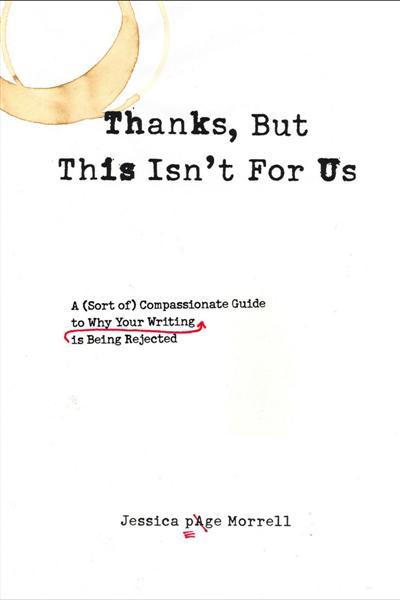
So go right now and order THANKS BUT THIS ISN'T FOR US by Jessica Page Morrell.


Next up is THE ROAD by Cormac McCarthy

I know, I hear you saying "but James, that isn't a writing book."
No it's not, but it IS a book chock full with some of the most breath-taking language I have ever read. This book touches my soul with its use of the english language. I read it right before making my revision pass on a novel. Just filling my mind with this heavenly wordsmithing makes me write better.


I also highly recommend Lilith Saintcrow's blog. Her posts on how to write made me realize that I could write a novel. Me. A guy who hadn't ever written more than some crap in high school and a TERRIBLE sword and sorcery thing during a late night gig being security at a downtown Atlanta jack shack. After reading her stuff I could and did write a novel that sold.

CLICK HERE FOR WORDS OF WISDOM FROM LILITH SAINTCROW.

So those are my fave writing tools.

Monday, August 13, 2012

WHEW! A LOADED PLATE OF PROMO

Okay, this topic really rings for me because I just got done with back to back promo gigs. In the last weeks of June to the first weeks of July I was promoting the 2nd e-novella in the Deacon Chalk series SPIDER'S LULLABY. I had about three days off and then it was right back into promoting the 2nd novel BLOOD AND SILVER (which came out last Tuesday and is kicking ass at a bookstore near you so go get it! *end shameless plug*)

Speaking of which here is my pic for this post.


THAT is James DiNonno and he is the cover model for the Deacon Chalk series. You are welcome ladies.

Back to the subject at hand.

When it comes to promo I just about killed myself for book one. I wrote something on the lines of 30+ guest blogs and interviews with an average word count of 1500 words. I sent hundreds of emails to get review copies in the hands of bloggers. I facebooked, tweeted, and blogged. I also did my fair amount of conventioning and author events. Moving around the Southeast wherever I could.

It was a LOT of miles, a lot of hours, and a LOT of words.

It was also a LOT OF FUN. I had a blast. But I was tired by the end.
I'm an old man. 42 this year and still running a business, having a family, AND writing books. Plus, some of you know my family had a personal tragedy that happened just around this time last year that rocked the state of our household. We are better now, but it was a lot for us to go through.

So the point of this ramble is that I cannot think of anything I need to do that I am not. I work my ass off to promote the books and get the word out.
But here is some advice for those of you with books to promote.
MAKE FRIENDS WITH BOOK BLOGGERS.
Seriously. They are gold when it comes to letting the reading public know about your book. Bloggers are like the CNN of the publishing world. The publishers, for the most part, are doing big stroke promotion for your book (if any at all) while they are selling someone else's also. Bloggers are targeted. They work close to the readers and they can make your book a bestseller.
They love authors, they love books, and they love to share. Bloggers do what they do out of love and they get no respect from publishing by and large. And you read blogs, we all do. They rock.

That's all for now folks, I have to get back tot he wordmines. I am working on not one but TWO all new manuscripts that I would like to get done before Dragoncon in 2 1/2 weeks!

HEAD DOWN. MAKE WORDS.

Monday, August 6, 2012

I LOVE IT SO MUCH

Books we hate to admit that we love. HMMMM, well, I have no shame at all so I am proud to say that I LOVE the MEG series. I really do.

Don't know MEG? Let me introduce you.
Reader, this is MEG.
MEG, this is Read.....Oh I am terribly sorry Reader, MEG just ATE YOUR FACE AND THE FACES OF YOUR ENTIRE FAMILY OFF!

Meg is a Megalodon, a TWENTY TON PREHISTORIC GREAT WHITE. The Tyrannosaurus Rex of sharks.

This is pulpy adventure and I love them. It ain't great writing but it is great fun. I mean look at this cover for MEG: Hell's Aquarium.


Just look at that face! I am so jealous that I didn't write these books that it makes me cross-eyed.

Go check out the author, Steve Alten's website
HERE

And enjoy these thrill packed books.