Showing posts with label Birdwoman. Show all posts

Sunday, January 24, 2016

Five Ways to Combat Bad Writer Habits

This week I put out on Amazon a short read. It's a true story I wrote some time ago, that was originally published in a literary magazine, about one of the most unsettling experiences of my life. A brush with the unseen that I don't care to repeat!

So, our topic this week is "My Bad Habit as a Writer."

Which took some thinking about, really. Not that I'm ALL THAT or anything... but I have rather ruthlessly weeded out my bad habits over the many years. An aspiring writer in LERA, my local RWA chapter (which rocks and you should totally join if you're anywhere in the New Mexico neighborhood - we have people who drive 3-4 hours to come to the meetings) messaged me this morning and said admiring things about my productivity. I replied that I've spent *years* building up the habits and skills to be at this point. Like... twenty years.

And I'm still a work in progress, which I suppose is part of the point. So, rather than focus specifically on my own bad habits, former, existing or future, I thought I'd give five ways that I've developed to identify and eliminate bad habits.

1) Own Your Process

I put this first because I think this is the most vital thing for us to discover about ourselves as writers. It trumps all other advice. If writing every day doesn't work for you, fine. BUT, learn what *does* work, own it, and hold your own feet to the fire. This takes a lot of writing, self-examination and ruthless honesty. There's a reason so many tales hinge on seeing oneself in the mirror or seeing oneself truly. The best thing any writer can do, in my opinion, is to concentrate on learning how they write best - and then holding themselves to that standard.

2) Kick Excuses to the Curb

Excuses are like opiates - they soften the edge of ambition. They make everything okay. Believe me, I hear such a huge range from aspiring writers. Family is usually a huge one, from kids to aging parents. There's something notable right there. Kids grow up and parents age, which means there will *always* be someone who seems to need you. That's not a bad thing, but their need can easily become an excuse. Again, this takes brutal honesty with oneself. Sure, some days the writing has to defer to something else - health, business, other priorities. But that's the key word: PRIORITIES. Have a strong prioritization list and don't change it. Many successful writers with kids put "somebody is bleeding" over "finishing wordcount," but everything else falls below that. It's salient to me that the productive writers I know never offer excuses for not getting their work done. They might bemoan failing to reach a goal, but they take solid responsibility for it. No excuses!

3) Listen to Your Editors - and Learn

I hear editors complain sometimes that their authors turn in book after book with the exact same elements that need correcting. A good editor/author relationship should be ever-evolving. I don't expect to receive edit letters on the drafts I turn in to say, "Perfect! You've done everything with such excellence that I have zero editorial comments." (Okay, maybe I fantasize about this - a girl can dream, after all - but I know that's not at all likely.) BUT, I really hope that I won't get the same editorial comments over and over. Working with an editor should improve my craft and skill as a writer. A good editor should help us grow. That can only happen if we're willing to learn.

4) Study Successful Authors

By this I mean anyone who's doing well. Sure some are flukes, but be wary of dismissing a popular book as beneath your notice. Even if it seems the prose isn't up to some standard, hundreds of thousands of people don't read "bad" books. Read at least some to discover what IS appealing to readers. Pay attention to the books *you* love to read, too, and learn from them. Take workshops from authors who are doing good work. Study what other writers are doing that makes them successful. There's always room to learn something more.

5) Keep a List of Recurring Tics

I've talked about this before, but it's worth revisiting. No writer is perfect. We all have various tics and crutches. I keep a list of words I tend to overuse, grammatical errors I often repeat, and punctuation bugaboos that escape me while drafting. Before I send to my editor, I spend usually an entire day searching my novel for these common mistakes. Over time, I've gotten much better about some of them. "Now" and "just" don't turn up nearly with the frequency that they used to. (Though when they do, they're inevitably in little poisonous nests, with several in one paragraph, or sometimes in the same sentence!) This loops back to #1, Owning Your Process. I don't worry about these things while drafting, because they're incidental to my process. I do, however, need to fix them at some point. No excuses for that.


Sunday, March 15, 2015

Finding Your Magical Writing Mojo

Last week I spent a few days in New Orleans with my mom and our guys, celebrating her birthday. This is us having lemon-drop martinis (this particular apple did NOT fall far from the tree!) at Lafitte's - one of my all-time favorite bars. In fact, my mother and I had drinks at this very bar, sitting at one of these window tables, during my trip to New Orleans for the neuroscience convention when I decided to be a writer, not a research scientist. Lo, these many years ago.

I do have my touchstones.

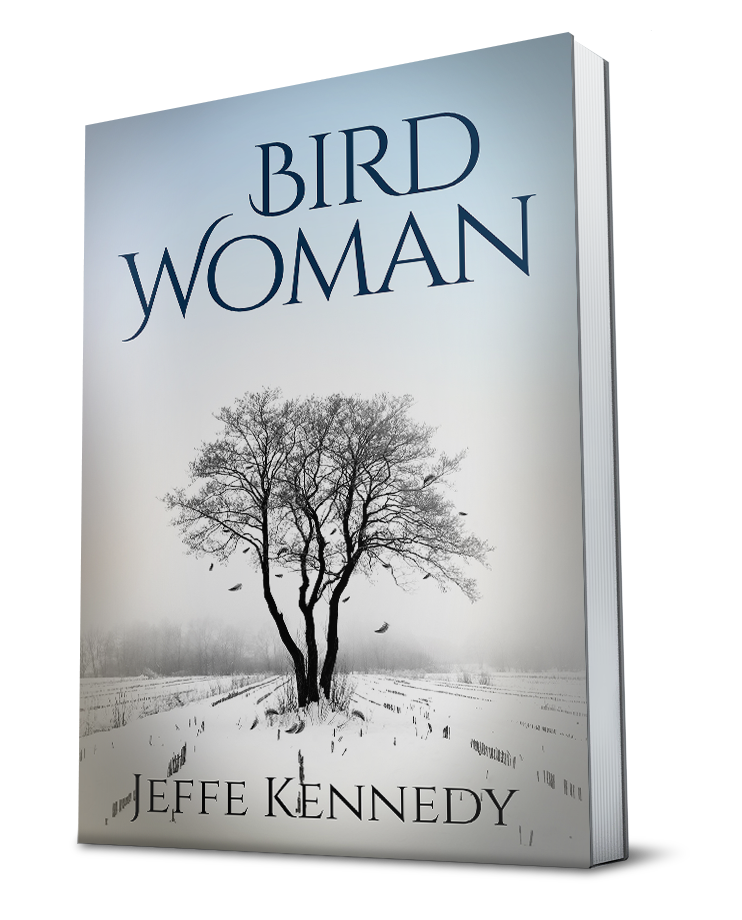
So, yes, I believe everyday magic, in the rituals and celebrations that both let me count my blessings and hopefully pave the way for more. Never let it be said that I'm not a superstitious person, in my way. Something that comes as a surprise to some people. I was telling my agent, Connor Goldsmith, and agency head, Laurie McLean, a story (Birdwoman) and mentioned as part of the tale that I used a pendulum to dowse for petroglyphs. Connor burst out - if you've met Connor, you'll know he has a way of bursting out - with "Good God, Jeffe, you're supposed to be a scientist!" I, naturally, leveled him an even stare and said, "Yes, and a good scientist relies on empirical evidence. I found the petroglyphs."

Heh. And then I freaked them both out with the rest of that story!

You'd think then, that I would have a natural answer to this week's topic: Writer Mojo: my lucky___ (item, coffee, etc.). The thing is, though, I don't. Not anymore. This is why.

See, back when I first set my sights on being a writer instead of a research scientist, I had no idea how to go about it. And yes, I was hugely superstitious about it, as one is when one is grasping for something, anything to hold onto. In a way, because I had no craft, no real skills to rely on, I reached for luck instead.

I think that's significant and something to keep in mind. Many writers refer to various kinds of appeals for outside help like this, whether to a muse or other sorts of divine inspiration. In some ways this reflects our sense that the stories don't come from us exactly, but stream from some other place that's not within our conscious control. I think it also reveals a lack of confidence in our ability to access that place and shape the story from there.

Because I didn't know how to make myself write, I came up with all sorts of superstitious tricks. There was this blue jersey dress I loved, but had worn too much for it to be socially acceptable anymore - stains and worn spots. I wore it to write, to cue myself for that activity. I had certain music, particular totems on my desk, a ritual of starting in to ease my way.

Those things meant everything to me - and the slightest misstep, the least bump in the magic ritual could derail me. I did this for YEARS. At least ten. Seriously. Which means that lucky, magic writing dress that had started in that job as being already too worn to wear in public, had suffered another ten-plus years of wear and tear.

It might have had holes in it.

Big ones.

And finally one day, my husband David pointed out that the holes had gotten so big as to indecently flash portions of my intimate anatomy. I replied (maybe a titch defensively) that only he saw me and what did it matter? He answered, with infinite patience, that the dress had become little more than a collection of strung-together rags and I should put the poor thing out of its misery already. With far less patience, I said this couldn't happen because it was my lucky writing dress.

I still recall the look he gave me as he said, "My dear - the writing comes from you, not from what you wear."

Huh.

It might sound silly, but it was kind of a revelation for me. I realized that he had the right of it, that I had been writing, getting my work published, winning awards and readers for quite some time by then. I had gained the skills and craft I'd lacked to begin with. Most important, I'd developed the discipline to create the foundation to allow the stories to stream in. Discipline that didn't depend on magic or muses.

So, I threw the dress away. Not without some mourning and a fair amount of grief. It marked an era of my life. I also ditched, one by one, my other writing rituals. As I eliminated each one and the stories continued to flow - even improve and lengthen - I experienced a newfound sense of freedom. It felt liberating not to need those things.

It gave me confidence, a kind of trust in what I knew how to do and what I could produce.

While some writers talk about their "muses" and how to coax them into visiting, others - like Neil Gaiman and Eudora Welty - have given great advice about doing the work. By sitting down and writing words, by putting in the time and dedicated discipline, we create the foundation for the stories to emerge. It’s not the clothes or the lucky mug or that perfect soundtrack, it’s us, developing the skills and concentration. Maybe it takes a long time to believe in that, but eventually we can set those crutches aside and trust in ourselves.

I did love that dress, though.