Showing posts with label writing advice. Show all posts

Tuesday, February 9, 2016

Essential Writing Tools

Thanks to KAK for posting on Sunday, while I was off at Daytona Beach watching ripped young men from the Embry Riddle Air Force ROTC do crunches. Oh, and being on panels, etc., at the Coastal Magic Convention. Damn, I love my job!

One question - why are my hats all out of order??

I'm going to weigh in on what KAK said, as she rounded things up nicely on our topic this week of our favorite writing apps. It's interesting where she and I do and don't overlap.

Before that, however, I want to address the overall topic, particularly as Jim and Linda have already indicated that they have little to nothing to say on the subject. They use Word and that's it. You'll also note that KAK listed Word first in her post. So did I.

It's important to remember that's because we are all established writers with habits and routines we've formed over years of work. Of course this is kind of a "duh" answer to us. But, it's worth pointing out that this is a question I see A LOT from newbie writers. I think the question arises partly from wanting to do things the best way and partly out of cultural conditioning, particularly in the U.S.

The man and I have a running joke, in fact, about how Americans love to "gear up" for new enterprises. Like the person who takes up biking and has to buy not only the bicycle, but all the color-coordinated gear, from socks to helmet. Or the one who decides to learn to paint and acquires the full-studio set of artistic supplies.

I think we're really inured into thinking that we need special tools to launch new enterprises. So, what are the essential writing tools?

Imma let you in on the secret!

YOU NEED TO HAVE: something to write on and something to write with.

Seriously. I'm not oversimplifying here. The beauty of being a writer is that we can get away with virtually zero overhead. A stubby pencil and scrap paper will get you by. Oh sure, eventually you're going to want to put those words into some sort of word-processing tool, because that's what everyone uses - whether you'll digitally format to self-pub or send to agents and editors.

Given those considerations, my five favorite ACCESSORY tools are:

1) MS Word:
I write in Word, edit, read for crit partners, etc. It's the industry standard and works just great for me.

2) MS Excel:
Me too on tracking All The Things. Submissions, sales, word count, project plans, P&Ls, etc.

3) Dropbox*:
Also on KAK on this one. I write all my manuscripts in Dropbox. It's a great relief to know I can rescue them from anywhere, should I need to.

Now she and I part ways.

4) Alarms and Clock --Windows 365:
I keep this window open for various timed events - 15, 20, 30, 45, 60 and 90 minutes. This lets me limit my social media time and pace my writing sprints throughout the day.

5) Calibre:
Terrific for converting, organizing and backing up my ebook library - including my own books. This is what I use to send manuscripts to CPs and beta readers, to send giveaway books to readers and reviewers, and to track what I have. Highly recommend!

Sunday, January 24, 2016

Five Ways to Combat Bad Writer Habits

This week I put out on Amazon a short read. It's a true story I wrote some time ago, that was originally published in a literary magazine, about one of the most unsettling experiences of my life. A brush with the unseen that I don't care to repeat!

So, our topic this week is "My Bad Habit as a Writer."

Which took some thinking about, really. Not that I'm ALL THAT or anything... but I have rather ruthlessly weeded out my bad habits over the many years. An aspiring writer in LERA, my local RWA chapter (which rocks and you should totally join if you're anywhere in the New Mexico neighborhood - we have people who drive 3-4 hours to come to the meetings) messaged me this morning and said admiring things about my productivity. I replied that I've spent *years* building up the habits and skills to be at this point. Like... twenty years.

And I'm still a work in progress, which I suppose is part of the point. So, rather than focus specifically on my own bad habits, former, existing or future, I thought I'd give five ways that I've developed to identify and eliminate bad habits.

1) Own Your Process

I put this first because I think this is the most vital thing for us to discover about ourselves as writers. It trumps all other advice. If writing every day doesn't work for you, fine. BUT, learn what *does* work, own it, and hold your own feet to the fire. This takes a lot of writing, self-examination and ruthless honesty. There's a reason so many tales hinge on seeing oneself in the mirror or seeing oneself truly. The best thing any writer can do, in my opinion, is to concentrate on learning how they write best - and then holding themselves to that standard.

2) Kick Excuses to the Curb

Excuses are like opiates - they soften the edge of ambition. They make everything okay. Believe me, I hear such a huge range from aspiring writers. Family is usually a huge one, from kids to aging parents. There's something notable right there. Kids grow up and parents age, which means there will *always* be someone who seems to need you. That's not a bad thing, but their need can easily become an excuse. Again, this takes brutal honesty with oneself. Sure, some days the writing has to defer to something else - health, business, other priorities. But that's the key word: PRIORITIES. Have a strong prioritization list and don't change it. Many successful writers with kids put "somebody is bleeding" over "finishing wordcount," but everything else falls below that. It's salient to me that the productive writers I know never offer excuses for not getting their work done. They might bemoan failing to reach a goal, but they take solid responsibility for it. No excuses!

3) Listen to Your Editors - and Learn

I hear editors complain sometimes that their authors turn in book after book with the exact same elements that need correcting. A good editor/author relationship should be ever-evolving. I don't expect to receive edit letters on the drafts I turn in to say, "Perfect! You've done everything with such excellence that I have zero editorial comments." (Okay, maybe I fantasize about this - a girl can dream, after all - but I know that's not at all likely.) BUT, I really hope that I won't get the same editorial comments over and over. Working with an editor should improve my craft and skill as a writer. A good editor should help us grow. That can only happen if we're willing to learn.

4) Study Successful Authors

By this I mean anyone who's doing well. Sure some are flukes, but be wary of dismissing a popular book as beneath your notice. Even if it seems the prose isn't up to some standard, hundreds of thousands of people don't read "bad" books. Read at least some to discover what IS appealing to readers. Pay attention to the books *you* love to read, too, and learn from them. Take workshops from authors who are doing good work. Study what other writers are doing that makes them successful. There's always room to learn something more.

5) Keep a List of Recurring Tics

I've talked about this before, but it's worth revisiting. No writer is perfect. We all have various tics and crutches. I keep a list of words I tend to overuse, grammatical errors I often repeat, and punctuation bugaboos that escape me while drafting. Before I send to my editor, I spend usually an entire day searching my novel for these common mistakes. Over time, I've gotten much better about some of them. "Now" and "just" don't turn up nearly with the frequency that they used to. (Though when they do, they're inevitably in little poisonous nests, with several in one paragraph, or sometimes in the same sentence!) This loops back to #1, Owning Your Process. I don't worry about these things while drafting, because they're incidental to my process. I do, however, need to fix them at some point. No excuses for that.


Tuesday, January 19, 2016

Dear Younger Me: 5 Bits of Social Advice for the Budding Author


I'm sorely tempted to say, "Ditto!" to James & Jeffe's posts and leave it at that. However, I'd be a total slacker. So in addition to their sage advice, here are a few things about the social side of writing I probably should have known when embarking in the writing game.

1. Find Your Tribes -- Plural
IRL & Online. Locally, Nationally, Internationally. Yes, you want to surround yourself with readers and writers, but grow beyond the closed-loop reader/writer circles. Connect beyond your genre. Connect beyond your skill set. Cut ties with the crazies fast. Nurture the ties that give as much as they take.

2. Sometimes the Authorverse is Just Like High School
Good, bad, and often as evil as it is uplifting, you're still being judged on how you look, who you hang out with, and whether you're the smartest kid in class. The cliques abound. You Do You.

3. Pitch Sessions at the Cons -- Skip 'Em
Go to the local and national conferences, skip the speed-dating pitch sessions. You're better off heading to the bar with a game of Jenga or a deck of cards. The point of the Con is to seed relationships, not to offer yourself (or your story) up for approval. If someone asks you what your story is about, have something ready to tell them, but it should be as natural a response as, "These shoes? Got 'em on eBay."

4. Critique Partners -- Invest the Effort in Finding the Right Ones
This is the hardest part of your writing career. It's not the rejections. It's not the shitty reviews. It's not the beloved book that doesn't sell. It's finding the right CPs. You need the ones who will read the story--word for word, line by line. Skip the skimmers. Find a partner who cares more about helping you deliver a quality story than hurting your feelings. Find the ones who can articulate why something isn't working as well as why something is. Find the ones who enjoy your genre. Find the ones who respect your voice, who won't try to rewrite your story in their image.  Remember, it's a partnership, not a duel. When you give your critiques, highlight the positives. Be mindful of how sharp your editing pen is.

5. "You are not a goddamn beggar at the banquet of publishing." -- Janet Reid, Literary Agent
This. This and always this. You will remind yourself of this so many times during the fits and shits of  your career.

Sunday, January 17, 2016

Five Things I'd Tell My Newbie Writer Self

This is our neighborhood roadrunner. She comes by fairly frequently and checks things out. Not easy to get a good pic of her either! This isn't the best shot I got (too much background, not *quite* in focus), but I love how it captures her purposeful stride.

Speaking of purposeful, our theme this week is: What I wish I knew when I started writing. 

So. Many. Things.

But, as with a lot of life, I think we learn things when we need to. Sometimes we're simply not ready to absorb a lesson that's staring us in the face. Everything below I heard many times over the years. All of them didn't sink in until much, much later.

Like, yesterday, even.

Still, if I could go back to my twenty-something self, on the day Past-Jeffe decided to be a writer, this is what I'd tell her. Even knowing full well she won't really understand.

1. Agents are just people.

Frequently they are crazy people. When they tell you that they didn't love the book enough to represent it, they really mean that. These are people who fall in love with books. They work on commission, which means the younger ones (the ones who will actually consider your query) are living on ramen, handouts from their parents, and love. Not people love, book love. They really do want to love your book, but if they don't.... well, it's not you, it's them. When you find the agents who do love your books - and actually they'll find you - they'll do great things for you. You waited to find true love in life. Wait for this, too. It will be worth it.

2. Having a regular writing ritual will make all the difference.

You're going to fight this, Jeffe, for far too many years. Yes, I know you're crazy busy. I know that a lot of the time you don't know what to write and often feel a creeping dread about sitting down to write. It's crazy making because you really WANT to write, so why do you hate the idea of doing it? Don't worry, this is totally normal. The only way around it is to write anyway. All those people advising you to prioritize writing, to try to do it every day at the same time? They're right. Things won't really kick into gear for you until you do this.

3. It will take a long time before you can make a living at it.

I know you think you know this - but you're young. You think a long time is maybe three years. It's going to be a lot longer than that. And that will be okay, because you need that time. Over the years, you'll learn many skills from your day jobs that aren't being a writer. You'll learn to juggle projects, to manage deadlines, to work with difficult people. All of this experience will be useful.

4. Your writer friends will be your salvation.

Ultimately these are the people who will help you the most. Yes, they will come and go and you'll mourn the loss of the ones who drift away. It's a tough business and jealousy can take its toll. But those friendships will sustain you along what can be a difficult journey. There are things only your writer friends will truly understand. The ones who stick with you will be the most generous, supportive and encouraging people you'll know.

5. Despite the rejections, set-backs and many tears (and there will be a lot of all of these things), you will never regret this decision. 

Seriously. Every time you wonder if this is the right decision, know this. Being a writer is every bit as wonderful and amazing as you hope it will be. Even with the many uncertainties, it will feed your soul as nothing else ever has.

Hmm. I've kind of choked myself up here.

Anyone else have things they'd tell their younger self, if they could?

Also, if you haven't yet read THE MARK OF THE TALA, it's on sale at Amazon for only $2.51. Great time to pick up a copy!


Wednesday, March 6, 2013

Phenomenal Word Count Powers...

by Linda Robertson

Phenomenal Cosmic Word Count Powers....

...itty bitty time for a life.


I agree with pretty much all my fellow word-whores have given as advice this week. Setting priorities, breaking a contract down into daily word count goals with built-in time for revision at the end, and days where you're just off and not writing here and there. It's a very mature and professional manner of approaching the writing job.

It all means you're working. Your butt is in the chair. The magic of your creative mind is coalescing there on the screen-page.

But what if you do not have a contract?

The priority can seem less important. SEEM is the prime word of interest there.

Truth is: Life happens. There's work, there's parent-teacher conferences, the car is in the shop and you have to wait for the mechanic to get it done and bring the car to your workplace which threatens your chances to arrive on-time at the conference, and one of your best pals and her husband end up in the hospital...

That was truly my Tuesday.

Yeah. Not a single word on the WIP. But I wrote my blog. (hee hee... :-) )

Hell, major remodeling, shifting nearly everyone's life inside the house and painting, painting, painting, has kept me from being creative for a few weeks. It hurts. If you're a writer who goes off daily to play in your personal version of never-never land, you know how not being there can feel like you've missed something, that somehow you were transported to this "real world" without a Tardis or a Doctor to return you to the world you love...

Don't beat yourself up over it. BUT...Don't let it be the excuse, either. Attend to life. And get your ass back in the chair. No one but you can make it happen.

All I can say that perhaps hasn't been said already is that when you find yourself in the ring (why is a square boxing/wrestling area called a ring?) and you assess your opponent, Life, this hulking figure that seems to fill the space leaving you no room to move, no space to make your stand and take a swing, you have to fight. Fight for that time to write. Fight to follow the advice the other word-whores have provided. Fight to put/keep your butt in the chair with your blessed creativity flowing all over the scene, dripping in every paragraph. If you're a writer, that fight is worth every ounce of sweat and every sore muscle, because the reward of the finished story--of that whole new world that is yours--is more valuable to you than almost anything else.


Thursday, December 6, 2012

Is It Done Yet?

by Allison Pang

Some days I really wish writing was as easy as cooking.

And that's a misnomer. I can't cook at all. I don't cook at all. But hey, there are so many things out there to help make cooking basics easy enough  - even someone like me can usually manage okay.

Like those lovely pop-up timers.  When it pops up, chicken is done. Ready to go.

In theory.

After all, I know sometimes the timers mess up and never pop. And then you end up with overcooked chicken.

Sometimes they pop up too soon and it tastes okay on the outside, but dig in deep enough and it's all cold and nasty.

Too bad writing doesn't work like that.

Or does it?

I think the long and short of it is that all these tools or shortcuts are simply that: tools. Just because the pop-up timer pops up doesn't mean we'ret not going to cut into that chicken and make sure it's *really* done on the inside, right? (Well, *I* might, Because I suck at cooking. But you know what? I can bake like a mofo.)

So maybe it really is the same with writing. Throw it out for consumption before you've edited it enough and it will fall flat on its face. Continue to edit it too much and you run the risk of over-polishing.

The bottom line is that only you can really determine when your book is done. You might get a lot of advice in that kitchen. Some will be helpful and some won't. And just like cooking - the first few times you try out a recipe, it might be a disaster - until you do it enough times to know how your oven really works and what combination of ingredients tastes the best.

Or maybe you give up cooking and try baking instead.  ;-)

Sunday, November 18, 2012

Ten Things I'm Thankful for in My Writing Career - a Retrospective

Seems like the topics lately have been lending themselves to lists. Either that or I'm in a list-y place right now.
This week, appropriately enough, given that it's Thanksgiving in the US, we're giving thanks particularly about our writing careers. This should be a pretty easy list to make, though determining the scope is less straightforward. I'm realizing just now that it's been twenty-one years since I attended the Society for Neuroscience Convention in New Orleans, melted down and faced the fact that I didn't really want to be a neuroscientist. Which was inconvenient, since I was three years into a PhD program at that point. That's also the year (coincidence?) that David and I started dating--a brief fling that's still going strong. I didn't know at the time what a pivotal year that would be for me.

Maybe we never know these things at the time.

So, without further ado, I'd like to give thanks that:

1) the universe gave me such an interesting answer when I asked what would be the perfect career for me.

2) I was surrounded by the warm and wonderful writing community at the University of Wyoming, who welcomed me in and offered me the tools I needed to grow into being a writer.

3) David supported me from the very beginning and even remodeled the old coal bin for me, so I could have a place to write.

4) I found a series of jobs and appreciative bosses who let me fiddle with my work schedules.

5) there are so many opportunities to send my writing into the world, from tiny university literary journals to magazines to anthologies to book publishers, digital and traditional, great and small - all staffed by extraordinary, dedicated people who love a good story.

6) there are also so many fine organizations to support writers - like the Wyoming Arts Council, the Ucross Foundation, Romance Writers of America. They were there for me when I got started

7) there is the fabulous, interconnected, multi-faceted beast the internet community has become. ~presses nose to screen~ All my friends are in there!

8) so many readers are so generous with their love of books. All those book bloggers who spend the equivalent of part-time, or even full-time, jobs writing reviews and talking up their favorite authors. All the people who take the time to post ranks on Goodreads and stars on Amazon, who tweet, email and Facebook message just to say that they loved a book.

9) that I live such a blessed life, that I get to spend my time doing this. That I am not living in a war zone, am not poverty-stricken, that I have the civil rights to write whatever I please, that I don't have to worry about my basic survival.

10) the universe gives us stories to tell in the first place.

Happy Thanksgiving everyone!

Monday, October 1, 2012

SHORT, SWEET, AND TO THE POINT (with a bonus cover reveal)

Writing short fiction is something I enjoy and am good at. In my Deacon Chalk series there are the two novels out (BLOOD AND BULLETS and BLOOD AND SILVER)
and also two novellas. (THAT THING AT THE ZOO and SPIDER'S LULLABY)
*all titles are links if you wanted to go check them out at the big online retailer :)

Plus several short stories that are up for free on a few blogs that run from 500 words to just a smidge over 2000. (most of those are linked to on my website www.jamesrtuck.com )

There is one thing that I have found is KEY to writing short fiction.

YOU DO NOT HAVE TIME FOR BACKSTORY.

Seriously. Cut it. You write a 20,000 word novella then you are allowed ONE PARAGRAPH of backstory that can only occur after the first 10 pages. This is the LAW. Break it at your peril. Subject to fines and imprisonment up to 300 years. Possible beheadament ( is that a word?)

Obviously I am joking, but I am serious that in a piece of short fiction you do not have time for backstory. Keep it off the page. Hint at it, work it in with a sentence here and a sentence there, but you cannot have an info dump or an exposition in the form of a chunk of dialog. No one wants that in your short fiction. Editors don't want to buy it and readers don't want to read it.

When you write genre short fiction you are basically taking your characters and dumping them in an extreme situation that they have to react to. The whole of the story is their situation and their reaction, nothing more.

Here is a conversation between a writer and a reader about short fiction.

Writer: Do you want to know how they got in the situation?
Reader: Don't care.

Writer: What made them who they are?
Reader: DON"T care.

Writer: Where the monster/big bad/nemesis/chain of unfortunate events came from?
Reader: DON'T CARE.

Writer: How amazing the world/magic system/political intrigue is that I made?
Reader: OMG I DON'T FREAKING CARE!

Writer: But I did so much reasearch and made some really cool things.
Reader: Don't care.

The point is that in short genre fiction it is all about the entertainment.  The fight, the turn, the moment things go south and how the main character deals. Save the rest of it for your novel. That's where the reader is sitting down to explore your creativity with you.

(And a short story/novella is NOT just something you yank out of your novel and plop it down for the reader. It still has to be complete in itself, not left dangling on both ends.)

So now for some picturey goodness to close us out and send you home, here is the cover for the third Deacon Chalk novel out March of 2013!
Ladies and gentlemen I give you BLOOD AND MAGICK!


Monday, September 10, 2012

PAYING FOR IT (putting the go in your algorithm)

The blogosphere has been all afire over the recent revelation of some authors paying for reviews.

It happens.

I know some of you are like: "So what's the big deal?"

Well, here's the big deal. The main bookselling website is Amazon. This is where the majority of books are bought in the world. That's not an exaggeration, it's just the fact. Amazon is also where the majority of reviews are placed.

Well, the thing you should know about Amazon is that they have this nifty little thing called an algorithm. We all know what it is conceptually, but no one who doesn't work at Amazon understands it fully. It's the Matrix. It's the ghost in the machine. It is the Wizard in the Oz. It is the selling peanut butter to your buying jelly.


You've been on Amazon. You've seen the items they recommend for you to buy. You get their emails suggesting books. This is all the work of the faceless, all-knowing, mysterious and strange algorithm.

There is one thing we know about the algorithm. It is driven in part by reviews.

Because the algorithm assumes honesty it actually weights reviews pretty heavily in its ranking and recommendation system. So when some asshat comes along and buys a ton of reviews they are gaming the system. They are pulling a shell game on you. They are feeding you a lie masked by your trust of the Amazon system.

If you buy their book based on the recommendation or the paid for reviews, then they are STEALING YOUR MONEY.

Now you might try their book and like it. If so, then win win. But I find that if you have to pay for it, then it's because you know you can't get it on your own.

So rest assured loyal readers. I have not and will not pay for a review. The reviews you see on my books are honestly given by folks who either liked (Yay!) or disliked (Boo!) my writing.

Now that being said. IF YOU LIKE AN AUTHOR THEN PLEASE GO REVIEW THEIR BOOK.

It really does mean the world to them and it could be the tipping point for them to get a boost in the algorithm's arcane machinations. It is the single best way you can support the writers you like besides buying their books.


Monday, September 3, 2012

WHY ARE YOU WRITING FANFIC?

I apologize for this blog being a bit late on the day. I have been at Dragoncon all weekend and am lucky to be awake, much less coherent enough to type.

Speaking of:


That was my first panel I was on. That's me, Faith Hunter, Kalayna Price, Laurell K. Hamilton, and Jeanne C. Stein. The panel rocked face and the house was packed. Hell yeah.

Now, to the topic at hand.

Look, if you want to be a professional writer, if you want to be published, if you want your book on the shelves of a store then knock it off with the fanfic.

I'm not hating on fanfic, but if you have the drive to write and the creativity to develop alternative plots and storylines then quit mucking about in someone else's world and start writing your own.

You can't sell your fanfic. You can't publish your fanfic. You can't truly call your fanfic your own.

What you can do with your fanfic is get sued for copyright infringement. (and before you get pissy at the "greedy" authors you need to understand that if an author does NOT defend (ie: sue you) their copyright then that copyright, by law, can be considered abandoned and fair game to published by anyone WITHOUT THE AUTHOR BEING PAID A DIME.)*

So, seriously, just write your own stuff. Don't be afraid. You can do it. And you will be happier for it.

And who knows, it might just become your first published book.

*this is a vastly oversimplified explanation of the complexities of copyright law. I am not an attorney, nor do I play on on television.

Monday, August 20, 2012

PIMP MY WRITE

I LOVE this week's topic.
The reason I love this topic is that it gives me the chance to pass on the word of some books and resources that I use and find indispensable.

I'm not going to yank your chain here. This first book is the ABSOLUTE TOTAL FREAKING BEST BOOK ON WRITING EVER WRITTEN EVER IN THE HISTORY OF THE UNIVERSE.

Seriously. I wrote my first book, BLOOD AND BULLETS and thought it rocked. I was gonna set the world on FIRE. I was querying it, getting requests for pages.....and a ton of rejections. My wife picked this book up at the local library. She flipped through it and said it was pretty good. I picked it up and read the first couple of pages.
The book then ate my brain for 3 days.
I read it cover to cover and when I put it down I realized one very important thing. The most important thing I had ever realized in my life.
My book sucked ass.
It's true. My book was awful. But I wasn't depressed or sad about it because Jessica Page Morrell had told me that I could fix it.
I took her advice, written in easy to read format, applied it, overhauled the book and then turned around and sold it in a 3-book deal from Kensington.

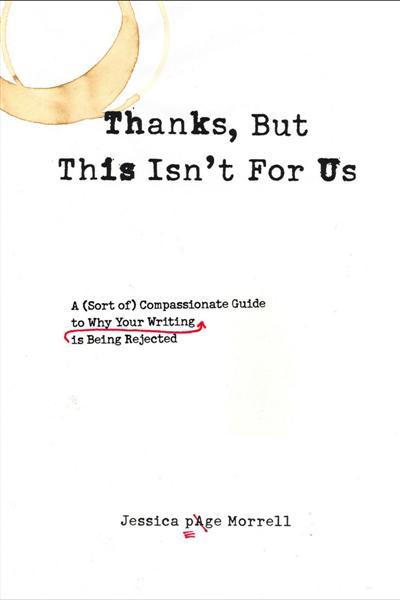
So go right now and order THANKS BUT THIS ISN'T FOR US by Jessica Page Morrell.


Next up is THE ROAD by Cormac McCarthy

I know, I hear you saying "but James, that isn't a writing book."
No it's not, but it IS a book chock full with some of the most breath-taking language I have ever read. This book touches my soul with its use of the english language. I read it right before making my revision pass on a novel. Just filling my mind with this heavenly wordsmithing makes me write better.


I also highly recommend Lilith Saintcrow's blog. Her posts on how to write made me realize that I could write a novel. Me. A guy who hadn't ever written more than some crap in high school and a TERRIBLE sword and sorcery thing during a late night gig being security at a downtown Atlanta jack shack. After reading her stuff I could and did write a novel that sold.

CLICK HERE FOR WORDS OF WISDOM FROM LILITH SAINTCROW.

So those are my fave writing tools.

Monday, July 16, 2012

ABOVE ALL ELSE, BE COOL

There is one huge thing you need to realize right now about the publishing industry.
Pull in close so I can whisper it in your ear.
Closer.
Ready?
EVERYBODY KNOWS EVERYBODY ELSE IN THIS INDUSTRY!
Truly they do. And they all talk. Now if you have a good reputation, someone likes you, they will tell others about you. That's a good thing.
However.
If you screw up it also means you will be talked about. Word will spread.
Now does this mean you have to sit on your hands, remaining meek and mild, super self-concious and on edge so that you don't ever offend anyone?
No of course not.
Have you met me? I'm loud. I'm big. I have strong opinions about a lot of stuff and gladly share them.
What you do have to do is maintain a level of professionalism.
According to Dictionary.com a Professional is: "a person who is expert at his or her work".
Simple.
A professional handles their work. They maintain their commitments. You take a deadline, meet that deadline. Yes, sometimes you need an extension and there is a professional way to ask for that extension, but a professional holds that card tightly.  You don't get to play it very often. 
What a professional does NOT do is blow off their deadline because they are too "busy" playing Skyrim (or whatever frivolous distraction you are wasting your time with.) or just being lazy.
A professional doesn't blow off a panel at a convention simply because they aren't interested or it's the last day.
A professional doesn't treat readers like some kind of second class citizen, somehow lesser than the esteemed writer class.
A professional doesn't smack talk their fellow authors, or publishers, or agents, or bloggers. If you have a legitimate beef with someone, be an adult and take it to them. Don't tweet it or blast it on your blog.
A professional walks away from a bad review, no matter how unjustified it may be.
In short:
BE COOL AND NEVER MAKE GEORGE TAKEI DO THIS

If you can maintain your cool and be professional then you could have Dean Winchester doing this instead:


 And isn't that preferable?