Showing posts with label Enemy Within. Show all posts

Friday, April 29, 2016

The One Star Review

 
Moon set on the western edge of the continent.
 
 
Reviews. Am I wrong in thinking there's so much weird psychology wrapped up in them? I mean, sure. 95% of reviews aren't meant for the author at all. They're meant for other readers, a fact I appreciate. All hail ANYONE who spends the time and energy to read a book and the write a review. That's the greatest gift a reader can give an author, I think - it's time and life energy spent on your book. Doesn't even matter whether the review is good or bad. It's still a chunk of another human being's life being dedicated to your work. So please, if you review books (mine or anyone else's) thank you. I owe you chocolate.
 
The other 5% of reviews, though, that's where things get strange and where the agendas become far more transparent than I suspect the reviewer wants. You know how it is. Writer slogs for years trying to learn her craft and get published. Because then all her problems will be solved! Finally, the call comes. The first precious book goes out the door into the wide world. Someone reads it. Then someone else. Reviews start coming in. And they're okay! Until - hey! ONE STAR?? WTH? Your heart lands in your shoes as you read. 
 
Interesting story: It happened to Enemy Within. A reviewer on Amazon left a one star review saying he didn't understand why anyone liked the book, there was nothing new in it. (Even more interesting - I just went to find the review to quote it and it's gone. Huh.) Why did that review in particular stick with me? Was it because it was the first critical review of the book? Not hardly. If I want to play my critical review trump card, I note that no one less than Angela James wrote a very constructive, if critical review of the book. No this one star review stayed with me because the reviewer's agenda was plain in his dismissive tone. He's a frustrated writer. He had an idea that was similar-ish, but his was SO MUCH BETTER - the only problem was that he hasn't written it. He may never write it. It's much easier to take pot shots at the work someone else did than to do your own and face that the reality will never live up to the idea.
 
It seems like if a critical review is constructive and calls out issues that bothered the reader, then it's an honest opinion. The snarky one or two line reviews that don't actually give you any specifics - those set off my psychology senses (100% unqualified as they are) I think it's Julia Cameron who, in her ARTIST'S WAY books points out that the most vitriolic critics are creatives who aren't creating. I do my best to keep that in mind when some nitwit drops a snide, unhelpful line of bitterness into the flow of actual reviews.
 
Would I get 'author behaving badly' demerits if I pinged that reviewer with a note saying 'write yer damned book already?'   :D


PS: Don't forget to offer up suggestions for a name change! See Jeffe's post on the matter. You do NOT want me naming this blog. Just saying.

Friday, February 26, 2016

Title Life Line - Throw Me One

Titles. Was this topic my suggestion? Was it? Cause I'm hopeless. I've been reading all week, hoping and praying for a silver bullet that would make me less bad at titles. Listen. Titling a thing gives me hives. More so even, than having to write the synopsis of the thing. 90% of the time, I file my story files under a character's name. All of my working folders are named things like 'Ari', 'Sinclair', or 'Heli'.

Even when I *do* name a story, at long, painful last, editors want to change it. No problem, I say, and I provide a brainstormed list of 20 other possible titles. But you know what happens? Every single time, so far? They go with my original title. And if you think that doesn't give me a complex about my titles, you're as crazy as I am.

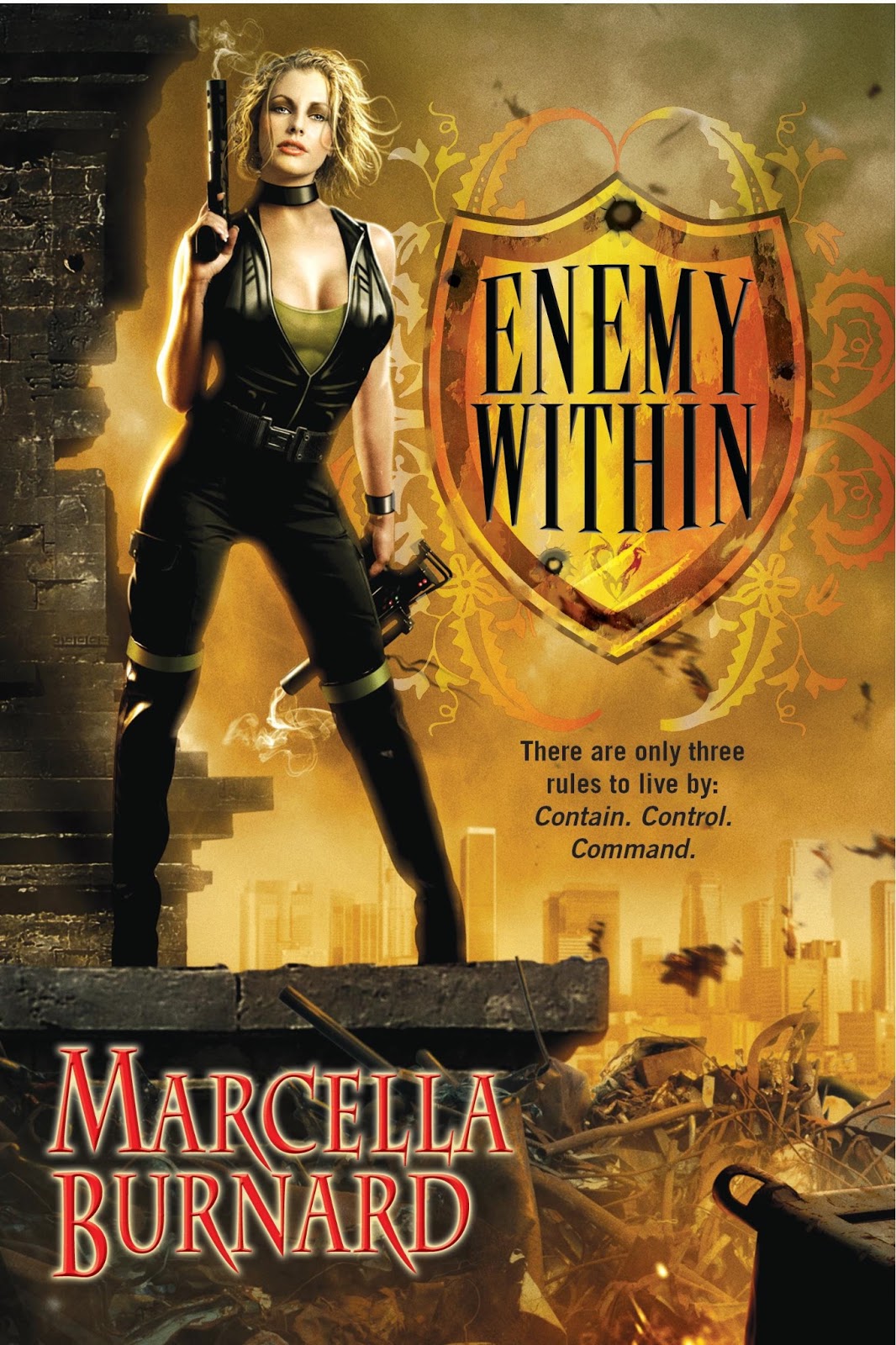
Like KAK and just about everyone else, I want my title to convey both genre and some hint of what the story might be about. That isn't to say it's always achieved. Just that it's a goal. Usually, I have to write a complete story before a title that isn't a character's name offers itself up for consideration. Those of you who know my work already know that the working title 'Ari' became the book Enemy Within (which was also the title of a movie that came out several years before my book did, speaking of avoiding duplicate titles. This happened again with Enemy Mine - which was NOT my title - my editor suggested it. When I said 'Enemy Mine, you mean like the Dennis Quaid/Danny Glover SF movie?' She had no idea what I was talking about because that movie had been made right about the time she'd been born. Yeah. Ouch.)

I'll tell you what. I will lay bare my current titling dilemma. I have a manuscript in edits right now. The working title is The Incubus and the Asexual. *I* love this title. No one else seems to. I'm completely open to a retitle, but everything any of my crit partners and I have attempted to brainstorm has just not fit. So the book will go through developmental edits and we'll see whether it offers up anything that does as good a job of telling you the story, the genre and the tone as The Incubus and the Asexual. Unless, you know, you have suggestions. Bring 'em on. When you're as hopeless at titling books as I am, it's a relief when someone starts tossing titles like a life line.

Friday, November 13, 2015

Dialogue: Choosing Your Weapon


Happy Friday the 13th!
 
We're chatting about dialogue this week. And let me say I have had more than my fair share of truly crappy advice regarding dialogue - the worst? "It should sound real!"
Took me a long time to figure out that's the worst move, ever. Dialogue in fiction is not about replicating the natural speech patterns we hear in day to day life. Mainly because most of us would want to gouge out our eyes after the third sentence that began, “And *I* was like . . .”
Dialogue isn’t meant to be a faithful representation of an entire conversation, either. It’s a weapon that each character in your story must choose and then wield to his or her best advantage. Words spoken in the text have several jobs to do: render the internal life of the character, put emotion and conflict on display, and place the story, characters and conflict in time and space.

Example from a WIP – I’ve removed almost all of the business, tags and stage direction. See if you can place the time and location based solely on what’s said and how it’s said. If I’ve done my job, you can.
----------------------------------------------- 

“Whoa. Whoa, there, Brutus!” a man called into the heated afternoon. “Silas!”
            “Henry.”
            “Look there. What do you see?” Henry asked.
            “It ain't what I see you got to worry about,” Silas finally said. “It's what I smell.”
            “Death,” Henry said.
            “Aye.”
            “Damnation.”
            “What is it? What's wrong?” a woman demanded.
            “Sally,” Henry said. “Looks like we've run across another damned massacre. Break out the shovels, boys. Celeste?”
            A slender woman riding a black and white paint with wicked eyes pulled up beside the lead wagon.
            “Town’s no more than a few miles,” Henry said. “Ride on ahead and fetch the sheriff. And a preacher, if they got one.”
----------------------------------------------------------- 

If this works the way I imagine it does, it’s the sound of these people talking that puts you in their time and place. Notice that in this dialogue set there’s not a single ‘that’ – it’s a modern addition to speech patterns that isn’t appropriate here. Then there are word choices: ain’t, preacher, damnation – all words that aren’t often used in modern speech. (So yes, this should say American West circa late 1800’s)

Contrast it with this bit from another book:
------------------------------------------------------------
“Dad. Status.”
“Screwed six ways to Sunday. The ship’s been commandeered. The four of them caught us unaware. No one takes science ships. We . . .”
“Casualties?”
“None.”
“Repairs?”
“Complete. Except that someone’s scrambled my command codes. What in the Three Hells were you thinking, locking me out of my own ship, Alex?”
“SOP, Dad,” she growled. “Could we put a cap on the trade secrets, please?”
The captain’s voice cut off anything her father might have said. “You know what I want you to know, now. So how about we talk trade?”
-------------------------------------------------------------------
 This should sound far more modern than the first example – if only because it’s from a science fiction novel. It’s terser. Faster. A more rapid fire query and response set designed to extract maximum information while giving away as little as possible (from the main character’s point of view – this dialogue was written entirely with her goal in mind – find out as much as she can without tipping off the bad guys.) While there’s a bit of military-ish jargon, there’s really nothing here in the dialogue to tell you that this is scifi, but you do get some hint of the conflict between Alex and her father with his comment about his command codes having been scrambled.
 

The last example I’ll offer should sound different yet again:
------------------------------------------------------------------------- 

“Hey. Ice,” he wheezed. “You’re looking good as always, babe, though I hear they make clothes in colors other than black these days. Ole Zoog was beginning to think you wouldn’t show.”

“I don’t want any crap, Zoog. What the hell is going on?” I demanded. “Did your new boss put a guy on my front door, a line into my computer, and then somehow divine my unlisted cell number? There’s a message being delivered. Care to guess what it is?”

“He doesn’t want you to help me,” he croaked. “Should have known he could reach this far. I told him you couldn’t be corrupted. Not like me.”

“Read a certain way, this could look like the grandmother of all set ups, Zoog. Look me in the eye and tell me it isn’t.”

“I don’t know, Ice. If it is, I’m not in on it. Honest,” he groaned as I hesitated. “I’m in big trouble, babe. I didn’t know where else to go.”
--------------------------------------------------------------------------
 
This is meant to place you in a city on the west coast of the US. Maybe the day after tomorrow. The dialogue is supposed to sound modern without being pigeon-holed by a bunch of idiomatic expressions that would date the speakers. At least, that was the idea. Longer arcs of thought and speech here are intended to give you the impression that these people are speaking everything that enters their heads – that this stuff is pouring out unchecked because the scene is starting to go pear-shaped. I don’t know that the dialogue actually does that all by itself. It would have been a more skillfully crafted scene if it did, but hey. Learn by doing, right?
 

So how do you shape dialogue to convey all you want?

1.     Each of your characters wants something in each scene.

a.      Only one character can win his or her objective

b.     They will each do their damnedest to win

c.      Let the fight begin

2.     LISTEN

a.      Your ear is your best friend when it comes to dialogue

b.     Read someone who writes in the time period and genre you’re writing (Shakespeare sounds totally different than William Congreve and Richard Sheridan, who sound different from the dime novels of the American west, which are different from scifi . . .)

c.      Movies with some modicum of verisimilitude totally count as research. Listen to how different characters pursue their goals via dialogue

d.     In the editing process, read your dialogue aloud. You’ll hear where it doesn’t work and where it does.

3.     Write

a.      Write more

b.     No, more

c.      Keep going


Friday, October 9, 2015

Taken Over: When Your Characters Grab the Wheel

How do I feel when characters take a left when I very distinctly remember instructing them to go right?

I live for it. It's the reason I write. It means the characters and their story have escaped the confines of my tiny mind. Whether taken over by gods or demons or the spirits of the abyss, I neither know nor care. Except for the fact that it does happen. If my characters don't dig their heels in, glare at me and tell me I'm wrong, then the story has no life. It doesn't breathe on its own. And I shove it into the book graveyard - the box under the bed. Really. This is why there are monsters and a birthday Grumpy cat in my office. They remind me to leave room for the weird and unexpected.

This means I can't outline. Not the way our resident plotters do. I find I have to hold plot very loosely, ready to let it go at any second, otherwise, I strangle it. It's the strangest thing. I'd so LOVE to be able to outline a story and write it beginning to end without wondering where the hell I'm going and why. (and why are we in this hand basket?)

After some trial and error, I've come to find that I can't write from WHAT (what happens). I have to write from WHY. Why these characters? Why are they here? Why are they the way they are? There are a few whats in that, too. What do they want and why do they want it. What are their fears? Their beliefs? You've heard me talk about it before, but I'm gonna say it again. Break Into Fiction. This is a character motivation driven method of plotting. No claim that it's better than any other - only that it's the way that makes the most sense to me. It's detailed and drills down into stuff that would make just about anyone else other than me cry. (Go to the live workshops for Break Into Fiction and I guarantee you'll see someone cry before the weekend is up, though usually happy tears...mostly.)

I end up with thorough understanding of my characters -- where they start and where I need them to end up. I know where the book starts. I know the inciting incident (in fact, I generally know these prior to sitting down to work through the character templates).  After working through the templates, I usually know where the book ends and in general  what has to happen to make these people earn their HEA. If they get one.

But just for example, my first book, Enemy Within. I had that book plotted. 100%. I knew EXACTLY what was going to happen. I started NaNoWriMo that year full of great hope and grand ambition. I blew through 25k words in no time.

And then everything stopped.

November ended and I was still staring at my blinking cursor. Finally, after a week and a half of me twisting and turning and trying to make deals with an uncaring devil, one of the characters took pity upon me and whispered inside my head one night that the thing I thought was the ending wasn't the ending. It was the end of the first act. Oh! Well okay! Let's move that right on up here and look! I'm writing! Wait! That was my carefully laid plot...and it's gone. I didn't drift in the void for more than a day, however. That was the point at which the characters stepped forward and took the reins of their story.

Is it an efficient way to right? Ye gods and little fishes, no. But it is the way this whole process works for me. I hope it's tidier for you. But if it isn't, all I can suggest is that you breathe and leave some space in your plans for everything to go wonderfully sideways.

Friday, September 26, 2014

Don't Know Marketing

Don't Know Marketing
Do you ever feel like you're only barely qualified to talk about something? Yeah. Me and marketing.  It is a gaping black hole in the speckled galaxy of 'stuff Marcella knows'.

Solution: learn.
My current 'favorite' paid marketing is actually a class on marketing I just started taking. Not that I intend to turn it into a business or anything - this is a base layer so I can understand how marketing works.

Marketing is about relationships.
If you are authentic, you build organic and lasting relationships with people who think like you do. See? My classes are paying off already. Before two weeks ago, marketing was just selling something. Maybe it's no surprise, then, that my favorites are about relationships.

Relationship the First and the Free
Feline-L. These are people I've known for years who are members of a Feline Fancier's Listserv. We may be techno-dinosaurs (those should totally be a thing), but we have members in Turkey, Israel, France, the UK, South America, Canada and the US, all of us bound by our appreciation for felines. Our members encompass people from all walks of life. Scientists. Veterinary professionals. Artists. Techies. You name it. Fellow sci-fi/fantasy author Noel-Anne Brennan is a member. She even coached me through a few things when I was first published.

Several of my friends of Feline-L have come over to Twitter. Several of us have a 10% pact - 10% of what we make goes to charity whether it be animal welfare, environmental causes, or any other charity. We Tweet that we're donating and to whom, but dollar amounts never go on social media. We're interested in being accountable. Not in boasting or being jerks.

These folks buy books, talk about books and they leave the best reviews. To this day, I have a file folder full of pictures of their cats with my books.

Relationship the Second and the Paid

World of Warcraft.

Laugh if you like. While you laugh, I will sing songs of raids conducted in imaginary, animated dungeons by groups of like-minded geeks talking to one another live in real-time via Ventrilo. Or Mumble. These are people from across the world, techies, mostly. Your main tank may be an IT tech for the US military in real life. The lead healer may be a cyber-security expert from Down Under. One of the hunters is a programmer who lives just down the street from you. Sure. A few of the raid members are still nerds living in Mom's basement. Most of them aren't, though, cause the ones who can't afford to move out can't afford the monthly pay to play. Almost all of them will bend over backwards to buy a book from that little gnomish fire mage with tragic fashion sense. One of my fellow raiders ended up joining the guild I belong to so I could talk him through working on his own book and getting it ready for submission. This is my other group of friends from all over the world. These people whisper me in game demanding to know when the next book is coming out. The guild leader posts my releases in the guild message of the day and leaves it up for a week. We host real life guild events that pull people from all over and my guildies bring their copies of my book for me to sign. When we hear a guildie is coming in from out of town (or from out of country) word goes out and we meet up. These people buy and consume books like they weren't addicted to an aging massive multiplayer online roleplaying game. They write awesome reviews and twist their friends' arms to read my stuff.

Getting to be friends with your readers, does it get any better?

Friday, August 15, 2014

Cover Reveal! Oh. And Maybe Sidekicks.

Look at what showed up in my in-box this week. The cover for Bound By Ink. Isn't it pretty? Creepy. Lovely. It makes me so happy. It's apropos that the cover showed up in time for this post, because it's in this book where I got the whole secondary character thing wrong.
 
Most heroes and heroines are pretty self-sufficient. So why do they even need a cast of supporting characters?
Well. How many of us exist in splendid isolation IRL? Sure. Depending on the day, any of us might *wish* we did, but the truth is we have family, friends, and coworkers no matter how dysfunctional. We’re social animals and we are products of our mostly shared human experience. (Yeah, okay, Dexter and Hannibal are notable exceptions…) There’s a psychological hypothesis that suggests most of us spend our lives building a family that cures the wounds acquired in our family of origin. No family of origin can be everything to each kid and that’s without any egregious dysfunction in said family. According to this theory, we come to our lives slightly injured. Winged and vulnerable. Searching for someone(s) enough like us to give us whatever acceptance we crave. We speak in terms of finding our tribe.
It is likely, then, that our characters are in the same situation. Either they are looking for a tribe that can bring them healing, or they are already surrounded by the people who can challenge them to become better.
All well and good, right? But why are these secondary characters necessary to the story at all? No matter the story-telling medium, secondary characters should be holding up mirrors to your MC. Each of those secondaries should show your MC some different aspect of him or herself. Secondary characters are forcing the MC to step up to whatever challenges need to be faced – they urge the MC to change – to acknowledge their shortcomings and overcome them.
Most of my stories are about alienated heroines searching for a place to belong. In the first two books, Ari and Jayleia each know that’s what they’re after. In their cases, they were each cast out of one tribe and are flailing while seeking another. Enemy Within and Enemy Games have big casts of secondary characters. Reasons: War. Five book series. Three cultures in conflict. Heroines expelled from family on one side, forced to cross political boundaries in order to find their places in the sun. The cast of secondary characters for those books are supplying the heroes and heroines for the rest of the series. There’s just a lot going on there and the cast of thousands really is necessary. Besides. War. People die. This requires that you have enough cast in place to accommodate the die offs.
In Nightmare Ink and Bound By Ink, Isa has no idea she’s seeking family. The whole family thing hasn’t worked out well for her and she’s frankly terrified of caring or being cared for. But when she ends up gravely wounded, she finds out she’s already surrounded by a group of friends who have made themselves her true family without her having realized it. Yet another group of unlikely allies orbit a little farther out, but they rely upon her. She finds out she can count on them, too, when the dying starts.
 
As for what I got wrong in Bound By Ink? How much is too much. My own tribe had to urge me to pull back on the extended posse appearances. So about the point that secondary characters are on the page simply because I needed to remind you they existed - that is posse gone wrong.


Friday, July 25, 2014

The Immutable Law of Canceled Series


Ah, yes. The canceled series. Have one of those. The SFR Enemy series was canceled after book two in a five book arc. And I'm currently writing a series that is open ended enough to on forever or end where ever. Canceled series can and do happen to anyone. The publishing world is littered with the corpses of perfectly good books that just didn't sell well enough. Fortunately, for readers and for authors there are now options for wresting victory from the claws of CANCELED defeat.


1. Shop the rest of the series to another publisher (hard, but it can and has been done).
2. Self publish - this includes all sorts of permutations like serializing the remaining novels on your website (think a chapter a week posted), Ebooks, web comics - whatever makes sense for your story and your interests.

The only caveat is: You DID read your contract before you signed it. Right? I ask because some publishers don't just buy the rights to the novels you present to them. They tie up your characters and situations. If you signed such a contract, then your only option is to stick a fork in that canceled series, cause it's done. Any attempt to self pub or go to another house with those characters you adore could get you sued. So, please. READ your contracts. If you don't understand them, find a contract lawyer, paralegal, or agent who can explain what you're signing. Ask questions. Make sure you aren't selling rights you want to retain.

Bonus: The Little Known But Immutable Law of the Canceled Series - any series canceled before the story has run its course will be canceled on a cliffhanger ensuring that readers and critiques alike curse the poor author's name for years to come.

I don't know what to do except shrug and say this is an immutable law. If you decide to write a series, keep it in mind as you decide how to end each novel. If you decide to read a series, I beg you to keep this law in mind as well because I assure you the author is banging his or her head against a wall about it, too.

What do *I* intend to do about my canceled SFR series that did indeed end on a cliffhanger at the end of book two? Write the rest of the series and get it out into the world by hook or by crook. In fact, finishing up book three is next on my slate. Right after the proposal for book three of the urban fantasy series (Nightmare Ink and Bound By Ink). With luck, book three will be available in some form or another by the end of the year.

I won't lie. It is a major kick to the ribs to have a series rug yanked out from under you. Scream. Cry. Consume mass quantities of chocolate. But then get to planning and writing. Because you have options and your readers may threaten to hunt you down and beat the story out of you if you don't avail yourself of them.

Friday, November 15, 2013

Double Trouble and Yet More Acting Jargon

What's hardest you ask with a straight face. The beginning, middle, or ending of a story? Yes, I answer. Depending on the story. But since I suspect a single word answer would bring a stray torch, or possibly a pitchfork my way, I'll elaborate. A lot.

Beginning and middle.

Here's why. A story, for me, cannot start until I know how it must end. To know how a story must end, I have to understand the characters. I must know what motivates them, what drives them (these two things *sound* like repeats of one another - they aren't). Motivation is background work. Drive is right now work.

Acting Jargon Alert!

Motivation gets thrown around in acting, but the upshot of 'what's my motivation?' is really 'why is your character on stage, right here, right now?' The answer to that question changes from play to play (or from story to story). I played a young nurse at a hospital treating the victims of the Chernobyl incident in a Russian play called Sarcophagus. At the end of the run of the show, my fellow students critiqued the performance. One of the women asked, "Why were you there?" I stared at her, because throughout the rehearsals and the performance, to ask that question about my character had never occurred to me. The moment she asked, however, I knew the answer. The young nurse I'd played wanted the medical director's job. Sounds simple - but it gave me a wealth of information that had been totally absent in my performance - my character should have been ambitious, idealistic, and yes, driven by her belief that science could overcome anything. Until Chernobyl proved it couldn't.

Drive in acting is actually called 'Objective'. 'What's your objective in this beat?' That's the question that gets asked about a distinct unit of action - the actor way of saying, "What are you trying to accomplish whilst you stand there yelling and waving a gun around?" The answer is supposed to be a transitive verb. You know. To cajole, to convince, to brutalize, to convert, to #add your active verb here#.

End Acting Jargon.

I must know what brought my main character(s) to a story. In Enemy Within - the heroine was motivated by desperation to prove she isn't broken. Her drive: to regain command (of a ship). Enemy Games - the main character craved identity (having been defined in other people's shadows all her life). Her drive: to cure a disease.

Once I know the motivation and the drive, I know how the story must end. Yeah, I'm not clear on how that happens, either. I just know that endings pop into existence. Like spontaneously generating goose barnacles.

The trade off is that I start a book six times. At least. And complain to anyone who will listen about how little progress I'm making while I write those various scenes. Thus, I say unto you, beginnings are hard. Until they aren't anymore.

Then the middle is. I wander. I dally. I dip my toes in the chilly waters of 'talking heads, not enough actual conflict'. I recycle some of the scenes I'd written for the beginning, but it turned out, were part of the middle. At about the 2/3 mark, I realize that the scene I had planned for the climax of the story is really the midpoint. If that. And then I flounder in the middle MORE because someone just redrew my roadmap. The GPS in my brain has the LONGEST 'recalculating' function...and for me, here lies the danger point. This is where, in the early days, stories littered the roadside, abandoned, because I couldn't seem to find a way out of wandering. It still happens. I'd like to think less frequently, but it does still happen. Usually, a revisit of the motivation and drive issues for all characters will give me the directional club between the eyes that sets me right again. Usually.

Still. Momentum begets momentum. Most stories, by the time I hit the 2/3 point, I can see the light at the end of the tunnel and I'm invested in getting my characters run over by that train (which should be a manifestation of their greatest fears based on the motivation and drive mentioned earlier - some days I'm better at that than others.) This is why endings are typically not a major problem. See me hedging my declaration? Totally superstitious and I do not intend to curse myself in that regard if I can help it. Having two parts of a story dogging me are enough.

Friday, July 19, 2013

Series: A Childhood Full of Scars

From the title, you may correctly assume I'm not crazy about books in a series. Not that I don't have series that I love. I do. And I'm not talking about trilogies or limited run series that have a definite plan and a specific, bigger than one book arc. Those can and are done successfully all the time. I'm talking about the Never Ending Series. Those are the ones where we read the same character doing either lots of the same stuff book after book, or wherein we see the same character having to top every book prior, often violating the rules laid down in the first few books, and ultimately jumping so many sharks that all willing suspension of disbelief gets flushed right down some kind of story-telling pit toilet.

Add into the fact that in the age of the dinosaurs (before internet) when I was a kid, a series meant you could find books 1 and 3, but not 2. Or you could find books 1, 2 and 4 but not books 3 and 5. Why do you think I took up writing stories originally? I mean besides the voices in my head. Right - it was to finally finish all those danged stories I had only PART of. That stuff leaves scars, man.

Thus, you have the background for my early decision to not write series. I say 'early' and mean 'the hubris with which my unpublished self assumed I'd actually ever be published at all'. Regardless. I wanted single title, stand alone stories. That's what I wrote. I thought.

So when Berkley asked for some revision on spec on Enemy Within, the editor also tossed out - 'Hey, what do you think about making this a series?' I banged my forehead on my desk a few times and said, 'Let me give it some thought and see where I can go with it.'

That's my 'selling a series' advice. Don't want to sell a series and you're pretty much guaranteed that someone will ask for one. Here's the deal, though, and mark that I'm speaking in gross generalization: Most of the traditional NYC publishers like two book contracts. Or maybe it's the agents subbing to those houses who like two book deals so much. If you're asked for a series, don't expect it to go past two books *with that publisher*. Most publishers want amazing sales numbers right out of the gate and when they don't happen, your two book contract isn't likely to be renewed. This doesn't mean you won't write for that publisher again - you likely will be asked to submit something else. Something that isn't in the series or even the genre you sold originally.

Granted, thanks be to the blessed interwebs, you can subsequently self pub the rest of your series. I'll be doing this with the Enemy series
- since that two book contract story was, in part, mine. (Talk to any number of authors and you'll find it's a common story. Sometimes 2 books, sometimes more, but the end is usually the same - an orphaned series.)

Thus, some advice regarding your series.
1. No cliff hangers - you guarantee that the next book in the series will be declined and your readers will come after you with torches and pitchforks.
2. Complete your stories with each book - this goes with the cliffhanger thing in a way, but really, if you're writing romance, it's about completing at least that portion of the story within one book.
3. KEEP NOTES - series bible, a spreadsheet, whatever. Keep a list of characters, eye colors, place names, etc, so that if and when your series is orphaned, you have everything you need to keep going on your own if you so desire.

Friday, December 16, 2011

You're Writing What, Now?

First, allow me to confess that the holidays are eating my brain. It was as I was stepping into the shower so I could rush off to an appointment that some more aware portion of my mind shouted, "Hey, dummy! Blog post!" So here I am on a borrowed laptop, feeling like a moron with a hangover - that last part is from staying up until the wee hours of the morning reading through the last novel I wrote prior to being published. Wow, that book sucked. It is notable, however, as the first book wherein I'd managed to write a detailed sex scene.

No one but the critique group got to read that. It wasn't until Enemy Within and Enemy Games were published that I had to face the notion of anyone in my family reading the sex scenes I'd written. I'll be frank. I do my best not to think about it. My folks haven't said a word about the sex scenes. There have been a few comments about how often my heroines swear...but the sex? Not a word. Not a word about the bloody, horrific (to me) torture scene at the end of book one, either. At least not from my parents. I've had a few 'concerned about how you came up with all that' comments from extended family.

The two novels have been relatively easy because the sex scenes are pretty pedestrian as far as sex scenes go. Writing them is no big deal. Reading them aloud to the critique group? Damn, I hate that. I do it anyway. Or - I did. But this summer, I switched gears briefly. I wrote an erotica novella. Never had to read that one aloud, which is good. I do not know that I could have...That piece was critiqued via email. Now, Berkley is publishing it as an e-special in April of 2012. It'll be called Enemy Mine. It is set in the same universe as the novels.

I can be blase about that story because neither of my parents owns an e-reader. Yet. I'm not quite sure how I'll handle it if Mom or Dad decides to get one just so they can download and read the story. True. All my life, my folks have tried to be very open about sex. They wanted to make sure that their kids could talk to them about anything. They did a good job. "It's a natural part of life," they liked to say about love and sex. "It's just a body, everybody has one," they'd say about nudity. So I have some hope that if either of them reads the erotica, they'll just nod and go on. I mean, this IS fiction we're writing. I try not to get hung up on the notion that someone will think I actually do the things I write about - but I don't wander around shooting bad guys or flying spaceships. I'm comfortably certain my audience knows that. It naturally follows that I'm not necessarily into the BDSM elements that may have snuck into that erotica. Right? Right?

Friday, June 24, 2011

When I Grow Up, I'm Gonna. . .

In 1969, I sat in front of our tiny black and white TV set and watched the first humans land on the moon. From that moment on, I wanted to be an astronaut. In my mid-teens, a friend and I decided to follow in our fathers’ footsteps. We’d enter the Air Force and from there, we’d apply to the astronaut program, which would naturally accept us both, and we’d get assigned to the same missions. No question. I tried to get into the Air Force Academy my junior year of high school.
Turns out, if you have asthma, the government is disinclined to allow you to soldier in any fashion, much less to entrust billions of dollars of equipment to your care. So there it was. My ambition. Shot down in flames before I’d even gotten to basic training. Probably just as well for all involved. I don’t seem to be wired to having other people tell me what to do. Authority issues R I.
For the record, my friend DID go to the Air Force Academy. He did become a test pilot. He did work at an undisclosed location in the Nevada desert, though he still won’t get me alien photos, darn it. He did apply repeatedly to NASA. The astronaut program never worked out for him and he’s retired from the military after more than twenty years of service.
As for me, I bounced around, trying to come up with a new plan. My father, in an attempt to be helpful, said that when one dream is snatched out of your reach, you should go for the next best thing. Granted, Dad had in mind a career in engineering or astrophysics on the ground at NASA. I went to college at Evergreen State, and then left before I could spend four years getting a degree in nothing. I went to work temping, doing a bunch of different jobs to see where I might fit in.
Nothing clicked. But I learned to scuba dive during that time. Yeah, I know. It was weird, but it was also a good time. Began taking one off classes at a community college – again, trying on careers. My very first computer programming class was a HUGE failure. That one put a big dent in my smarts confidence. So I signed up to work behind the camera in a weekend workshop that paired techie types (behind camera) with wannabe actor types (in front of the camera). The two instructors auditioned everyone who applied to the class. This startled me, but I figured what the hey? I’ll read the bit they gave me and then we’ll talk about letting me get my hands on a video camera. The woman in charge of the actors refused to let me go. She declared I’d be in front of the camera. Oh. Two years later, I was auditioning for and accepted to the Acting Conservatory at Cornish College of the Arts.
Note that acting professionally was never actually a plan. It was an accident – a happy one at the time, and something I desperately needed. I had no emotional vocabulary prior to acting school and only a passing acquaintance with the fact that I actually, you know, felt stuff. I did bit parts here and there and promptly made more money as a singer than I ever made as an actor.
Another career change was clearly in order. I had a BFA in Acting and no way to pay student loans. Oh, look! Temping! Then along came Microsoft, where I found out I suck as a secretary (damned authority issues), but I was good at HTML and SQL. I trained up and went to work.
And yet.
One thing remained constant, from the time I was a little kid, through school, through dreams smoldering on the ground, through confusion, heartache, acting school and days spent tending my customers at work: telling myself stories. During breaks, down time, or, at school, whenever I’d heard the lecture one too many times, I wrote snippets of stories. Little things to keep my heart and mind active and alive. Early in my marriage, my husband challenged me to begin submitting. I’d never actually finished anything to that point, but I accepted his dare.
And got my very first rejection letter from Marion Zimmer-Bradley. I still have that letter. Somewhere. When the call came to say Berkley wanted to buy Enemy Within, it was my husband I called first to tell him that ten or twelve years later, his dare had finally paid off.

Friday, March 25, 2011

Pantser or Plotter or...

My post it a little late this morning because the calls for Golden Heart and Rita finalists went out this morning. After the butterflies and angst over whether Enemy Within was good enough or not good enough, the phone rang once at 8:02 and then again at 8:09. :)  The book finaled in Best First book and in Paranormal. I'm still shaking. Now, however, I'm supposed to think clearly and work.

My answer to the panster or plotter question is: yes. I do an odd amalgamation of the two. There's another question that I have to ask in order to explain what I do. Are you a character driven or plot driven writer? If you're plot driven, what happens in your story defines who your characters are. If you're a character driven writer, who your characters are defines what happens in your story. I totally made those definitions up. But it really is how I think about story. I'm distinctly a character driven writer and up until the start of Enemy Within, I was 100% pantser. Which is to say, I had no clue where a book was going or why. I knew where it began and I know vaguely how I wanted it to end, but everything in the middle was a mystery. The result was a series of events that happened to my characters simply because I said so, or because I thought 'hey, this would be cool'.

Not a one of those books is publishable, much less published. By coincidence, just as I began Enemy Within, I took a Break Into Fiction workshop given by Mary Buckham. That's where I realized how very character driven I am and how desperately my storylines need to come from the strengths and failings of my characters.

So. I'm a plotter in that there's a huge set of templates (directly from Break Into Fiction) I work through for both hero and heroine before I can start writing. This puts me directly into their conflict and dilemma set. I have a good grasp of their emotional start points and of the arc necessary for each of them if they are to achieve their HEA. That, then, leads to situations and scenes that must occur to challenge the pair. But you'll note there's no actual plotting happening. That's because like several of my fellow Word Whores have already said, if I know too much about what happens, why should I write the book?

On the other hand, I can't know too much about the characters. The more I know, the better the book becomes. The more I know my hero and heroine, the better the chances that they'll start running scenes in my head without any input from me. Usually at night. As I'm trying to get to sleep. That's when I know a book has taken on a life of it's own. When it begins spontaneously generating, the characters and their story have begun living and breathing in spite of me. But I still don't know what's going to happen. I do sometimes wish I could be a plotter. I'd like to be a faster writer. This driving off into the fog thing isn't the most productive method around and I have a twisted desire to be insanely prolific.

So there you go. Panster? Yep. Plotter? Kinda - from a character arc standpoint. But now, to accommodate my wish to be prolific, it's time to go to work.