I love the dramatic cloudscapes of New Mexico's monsoon season.
So, in this week's cage match throw-down over drafting vs. revising, for once I get the last word. That's because I was crazy helping my folks move last weekend and the always-helpful Veronica stepped right up to swap places with me.
It's getting a bit uncanny, how much alike James and I are. I'm glad he copped to feeling like something is wrong with him, because I'm there, too.
I really hate revising.
To me, revising means I screwed up the first time around. Yes, yes - I know you are are shaking your heads at me, perhaps fondly, more likely in irritation. But the truth remains that, in my heart of hearts, I believe that if I got the damn story correct the first time around, I wouldn't have to go back and fix it.
You have to understand that I'm also the girl who literally does crossword puzzles in ink (pencil is way too vague and smudgy). In college, I composed all of my papers on my Brother Correctronic typewriter (a blast from the past for all my fellow pre-PC folks out there) and turned them in that way. I learned early on to never go back and check my answers on exams - as the common wisdom instructs - because, if I changed my first answer, I inevitably changed it wrong.
I don't like getting things wrong.
Oh yes, this is compulsive, likely obsessive, perfectionistic and downright weird, but revising to me means fixing errors and it's wasted time that I could be spending writing the new thing, if only I'd gotten the previous thing right the first go-around.
This is not to say that I don't revise. I do.
And I grumble to myself the whole time.
However, as I become a better, more-practiced writer, my revision passes are becoming less involved. I inevitably have some smoothing to do at the beginning, since I discover all sorts of things along the way. By the time I've found out how the book ends, I usually need to tweak a few details at the beginning.
If I've done my job right, even my critique partner (CP) feedback only requires similar tweaking.
After that, I more or less cheerfully accommodate my editors' edits. The more involved developmental edits sometimes give me that "you screwed up" feeling, but more often I feel like it's taste or massaging to the market. Line and copy edits are no biggie. I don't care about commas. I accept most suggested rewordings.
One of my CPs insists that revision is holy work. That's exactly what she calls it.
For me, writing the story is the holy work. And if I'm diligent, clear-minded and true of heart, I'll get the story right as I write.
It's like being connected to the Tao, to the creative flow of the universe, pouring through me and into the work.
There's nothing else like it. Not even sex - and that's saying a lot.
Not a thing wrong with that.
Showing posts with label Editing vs. Revising. Show all posts
Saturday, August 3, 2013
Why Drafting Rocks Revising Out of the Water
Labels:
editing,
Editing vs. Revising,
holy work,
Jeffe Kennedy,
revising,
Revision
Friday, August 2, 2013
Torture Versus a Slog Through Hip Deep Mud - Editing/Revising
Editing versus revising versus rewriting is a matter of sharpening focus. To my mind, editing is a close up examining surface blemishes - grammar, punctuation, fat finger mistakes and tweak-y word choices. (It isn't your imagination. I've used this photo before. ) While in editing mode, I'm no longer inside a story. The plot and characters stand on their own. Editing makes the OCD part of my heart oh-so-happy. I get to rest story brain and fuss with niggley detail that requires a more rules and detail-oriented slice of gray matter.
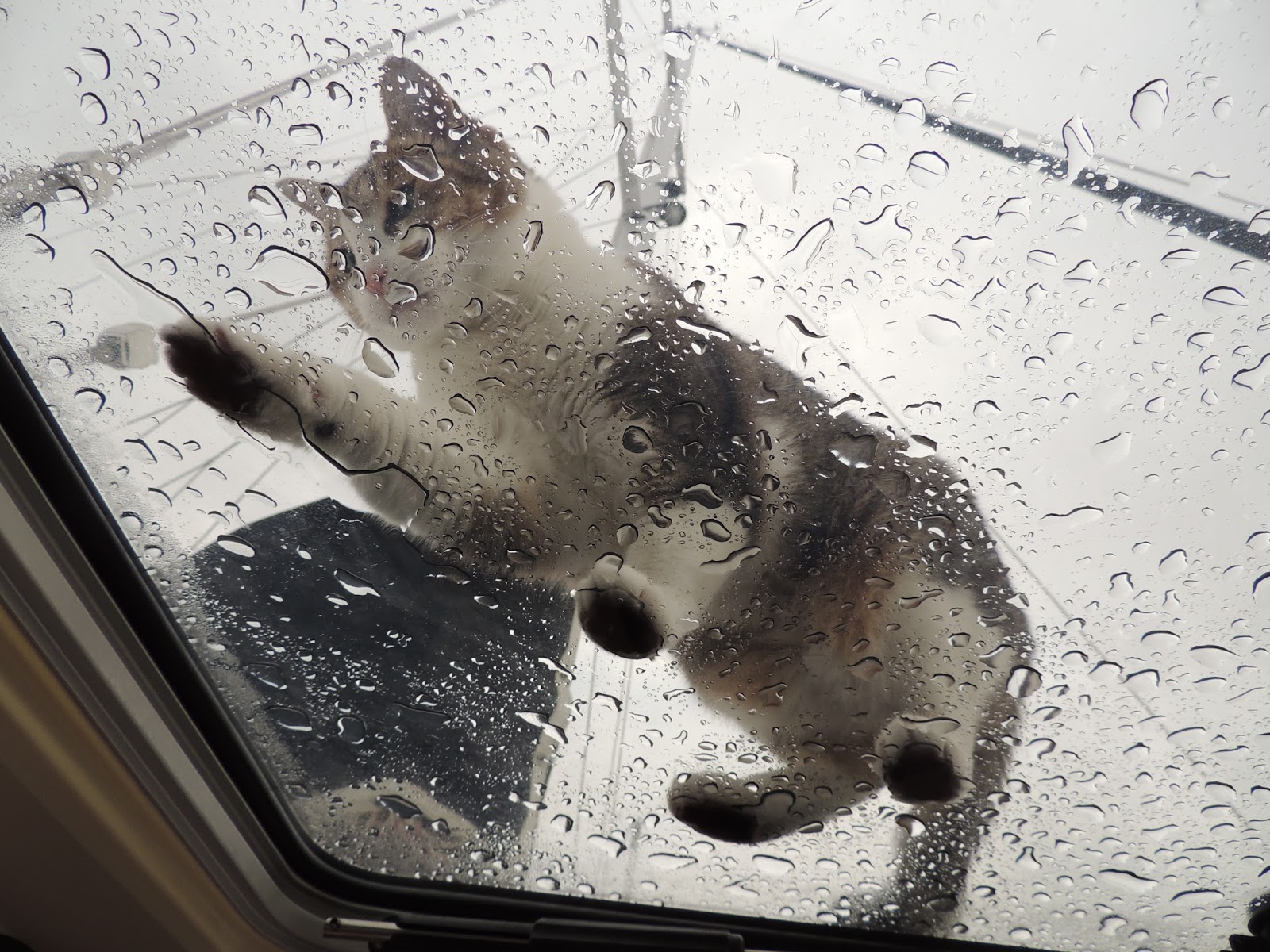
Don't laugh. When I've been thousands of feet deep inside the belly of my own personal whale of a novel, switching to smoothing the surface of the ocean is a relief. (Like how I did this photo - looks like I'm deep but you can see the whole of the cat who's eye is above? Work with me. Cat and boat photos are about all I have.)
Never let someone tell you it's easy. There are people for whom drafting is a swift, joyful journey into the unknown and revision is a slog through hip-deep mud. Infested with leeches. Then there are people for whom drafting is torture and revision is a giddy, slippery-slide to THE END (me). But few normal people will shrug off the mental gymnastics required of revision. This is the spot in the writing process where it
feels like you have to see the forest AND the trees. All at once. It's a special mind space, I think, but one that's hard to articulate. I can only say it's far easier for me to know what to say to make something right after I've written it wrong. And I do mean wrong rather than incorrectly. Incorrect is what editing fixes. Written wrong is what revising is all about. Remember in junior high when other kids were making fun of you for something? You didn't know what to say or what to do until at 2 in the morning, the perfect response occurred to you? This is my life. No, no. Not the being made fun of part. Usually. I mean that my brain rarely comes up with the perfect thing to say until long past the point that I needed to say it. This is why drafting a novel is a one way ticket to the pit of hell for me. I drag my typing fingers, hoping the perfect words will deign to emerge. All I ever get is flipped off and an easier revision because THEN things start coming to me. This lack of mental nimbleness makes me a less than stellar Tweeter, speaking of deserving to be made fun of.Rewrites are a different critter altogether and I won't be providing more than a mental image for your blog reading pleasure. Rewrites require you to stand in the bleeding, steaming guts of your story, pulling out bits of bone and vital organs in order to figure out why this creation you want to see living and breathing on its own refuses to do so. Then you have to stuff everything back inside, sew it all up, and hope the lightning strikes soon. Dr. Frankenstein. Painful? Yep. Gory? All too often. Full on emotional meltdown is reasonably common, too. But once the anatomy is rearranged, there's some fun in finding out whether your monster will rise to then be polished up before being loosed upon the world.
Thursday, August 1, 2013
Revision Provision
by Allison Pang
This is a rather timely topic, seeing as I'm right in the middle of revision hell as we speak. And I should probably preface that a bit. It's self-revisions, as opposed to editorial revisions, so it means I have a little more flexibility than I might if I were staring at a revision letter.
My writing process tends to be a bit convoluted at times. Due to the panster nature, things often don't come to light plot-wise for me until the end of a draft. A lightbulb goes off and the last piece of the puzzle slides into place and then everything makes sense.
It's not always a particularly efficient way to write, but it's how I do it.
So what does that mean for editing vs revising?
Well, for one thing, I don't bother with basic editing - punctuation, spelling, sentence snipping and the like until I have a completely finished and revised draft. Sure, if I see something really out of place, I'll fix it, but otherwise, I leave searching for things like word echoes until the very end. Part of that is maybe being lazy, but in truth, since so much of my revision process involves rewriting or plot modifications, I consider it a waste of time to fix up the tiny things - there's a very good chance I'm going to cut it or move it or change it so much along the way that I'd just be doing extra work with no pay off.
In my current WIP, for example - I finished the dirty draft at 92k. That's okay, but it's also the shortest draft I've ever written. So many ideas and changes popped up along the way of writing it that I knew I'd have to make some additions. I printed out a hard copy and began to take stock of what I had. I tend to use sticky notes and highlighters and I look at the overall structure. Does it flow? Are chapters too long or too short? Are there too many instances of people standing around talking?
Once I've made my base notes, I start the revision process. Which in my case means I've added nearly 20k so far (and at the rate I'm going...quite possibly another 20k or so.) Once I have the additions and reworking done, I go through it again. This time I'm looking to cut - extra words, dialogue tags, sentences that maybe reference something I cut before - basically continuity and sentence massaging. At that point, I may send it out to beta readers to get some feedback, but it depends on if I have time for that, based on possible deadlines.
After line edits and incorporation of beta suggestions, it goes off to my agent or editor and I'm done...until I get an actual editorial letter.
A few years ago when I was all fresh and new at the professional writing gig, I was waiting on my edits for A Brush of Darkness. I'd actually started writing a Sliver of Shadow in the meantime - got 40k into it before my editor put the brakes on that. (Which was frustrating because I wanted to be productive and get my ducks lined up as early as I could.)
The reason? Her editorial revision letter for BoD was 26 singled spaced pages. I essentially had to gut the book and rewrite about 70% of it. (The overall plot stayed the same, but the mechanics? Oof. Yeah, they changed.)
She knew based on the number of changes she'd asked for that much of the second book would probably not work out - and she was right. And, in fact, writing that second book became that much more difficult, because I'd already had ideas and concepts rather firmly entrenched and it took me a while to wrap my brain around having to essentially scrap most of it. Wasted time, all the way around.
But here's the thing. As much as I try to fix up my writing and my story to the best of my ability, one of the hallmarks of being an author is flexibility - knowing when to stand your ground in the face of editorial requests vs taking an objective look at what is going to make your story better. Being told to clean up sentence structure is way different than being told you need to remove a character, and even if your knee-jerk reaction is to be "NO WAY!" that doesn't mean you shouldn't at least try to see the reasons behind the change request.
So like everything else, revisions and editing are about balance. It *is* possible to over-edit or over-revise. The key is being able to streamline your work without losing the components that make the story yours.
This is a rather timely topic, seeing as I'm right in the middle of revision hell as we speak. And I should probably preface that a bit. It's self-revisions, as opposed to editorial revisions, so it means I have a little more flexibility than I might if I were staring at a revision letter.
My writing process tends to be a bit convoluted at times. Due to the panster nature, things often don't come to light plot-wise for me until the end of a draft. A lightbulb goes off and the last piece of the puzzle slides into place and then everything makes sense.
It's not always a particularly efficient way to write, but it's how I do it.
So what does that mean for editing vs revising?
Well, for one thing, I don't bother with basic editing - punctuation, spelling, sentence snipping and the like until I have a completely finished and revised draft. Sure, if I see something really out of place, I'll fix it, but otherwise, I leave searching for things like word echoes until the very end. Part of that is maybe being lazy, but in truth, since so much of my revision process involves rewriting or plot modifications, I consider it a waste of time to fix up the tiny things - there's a very good chance I'm going to cut it or move it or change it so much along the way that I'd just be doing extra work with no pay off.
In my current WIP, for example - I finished the dirty draft at 92k. That's okay, but it's also the shortest draft I've ever written. So many ideas and changes popped up along the way of writing it that I knew I'd have to make some additions. I printed out a hard copy and began to take stock of what I had. I tend to use sticky notes and highlighters and I look at the overall structure. Does it flow? Are chapters too long or too short? Are there too many instances of people standing around talking?
Once I've made my base notes, I start the revision process. Which in my case means I've added nearly 20k so far (and at the rate I'm going...quite possibly another 20k or so.) Once I have the additions and reworking done, I go through it again. This time I'm looking to cut - extra words, dialogue tags, sentences that maybe reference something I cut before - basically continuity and sentence massaging. At that point, I may send it out to beta readers to get some feedback, but it depends on if I have time for that, based on possible deadlines.
After line edits and incorporation of beta suggestions, it goes off to my agent or editor and I'm done...until I get an actual editorial letter.
A few years ago when I was all fresh and new at the professional writing gig, I was waiting on my edits for A Brush of Darkness. I'd actually started writing a Sliver of Shadow in the meantime - got 40k into it before my editor put the brakes on that. (Which was frustrating because I wanted to be productive and get my ducks lined up as early as I could.)
The reason? Her editorial revision letter for BoD was 26 singled spaced pages. I essentially had to gut the book and rewrite about 70% of it. (The overall plot stayed the same, but the mechanics? Oof. Yeah, they changed.)
She knew based on the number of changes she'd asked for that much of the second book would probably not work out - and she was right. And, in fact, writing that second book became that much more difficult, because I'd already had ideas and concepts rather firmly entrenched and it took me a while to wrap my brain around having to essentially scrap most of it. Wasted time, all the way around.
But here's the thing. As much as I try to fix up my writing and my story to the best of my ability, one of the hallmarks of being an author is flexibility - knowing when to stand your ground in the face of editorial requests vs taking an objective look at what is going to make your story better. Being told to clean up sentence structure is way different than being told you need to remove a character, and even if your knee-jerk reaction is to be "NO WAY!" that doesn't mean you shouldn't at least try to see the reasons behind the change request.
So like everything else, revisions and editing are about balance. It *is* possible to over-edit or over-revise. The key is being able to streamline your work without losing the components that make the story yours.
Wednesday, July 31, 2013
EDITING vs. REVISING
To me, editing a novel means FIXING/AMENDING the nuts and bolts of a story. It can be correcting typos, cutting exposition, or tightening a scene for pacing purposes. It can be adjustments made to firm up logic, or address areas where the language is too flowery or too stilted.
You know...it's an oil change, new brake pads--making what you have work better. It may mean adding those ass-kickin' skull emblazoned new seat covers you wanted to dress it up a bit, and it might be the opportunity to upgrade to that stereo and speaker system and that will really resonate and literally vibrates your little bug down the road.
Likewise, to me, revising a novel means tinkering with the engine and fuel source of a story. As in the main plot, the subplot(s), or character arc. It means changing something integral to the basis of the story, something which effects everything. Change the gender or race of your main character. Change the setting from modern day NYC to Victorian England. Instead of a heroine with a three-legged dog as a side kick, she gets a spunky kid sister instead. This is rewriting. Sometimes, it simply has to be done if you want to sell a story.
You know...it's taking that rusty and dented body in sky blue, the one you love so much, and allowing it to become more than you ever intended...reshaping it with tools and bondo, working it through a couple coats of primer, and ending up with a sleek and glossy cherry red. It's taking that reliable work-truck and trading it for something new and sporty, something more maneuverable and exciting.
So...if you are writing, then conceivably, editing is something you are quite able to do. Spell check, grammar, etc. There are resources available to correct the mechanical stuff.
Revising however, requires that you are willing.
Personally, when I have an idea and I get it onto the screen-page, a rough outline forms around it. Sometimes I write myself into a corner and have to revise everything. When I do reach the end, my self-editing ensues addressing mechanical issues while I debug and re-calibrate as needed.
If an established and reliable editor or agent with a proven track record offers suggestions based on what they see as needed for the story, or ideas that would improve the story and its impact on readers in a positive way, then Hell yes I am going to seriously consider how to address their concerns.
Don't be the author standing in the dark pit of some plot-hole that swallowed them alive, and shout up into the lighted world of the writing business (where sales are actually made), saying, "No I like it this way."
![]() |
| OIL CHANGE |
You know...it's an oil change, new brake pads--making what you have work better. It may mean adding those ass-kickin' skull emblazoned new seat covers you wanted to dress it up a bit, and it might be the opportunity to upgrade to that stereo and speaker system and that will really resonate and literally vibrates your little bug down the road.
Likewise, to me, revising a novel means tinkering with the engine and fuel source of a story. As in the main plot, the subplot(s), or character arc. It means changing something integral to the basis of the story, something which effects everything. Change the gender or race of your main character. Change the setting from modern day NYC to Victorian England. Instead of a heroine with a three-legged dog as a side kick, she gets a spunky kid sister instead. This is rewriting. Sometimes, it simply has to be done if you want to sell a story.
![]() |
| TRADE THIS OVERUSED STORY VEHICLE... |
You know...it's taking that rusty and dented body in sky blue, the one you love so much, and allowing it to become more than you ever intended...reshaping it with tools and bondo, working it through a couple coats of primer, and ending up with a sleek and glossy cherry red. It's taking that reliable work-truck and trading it for something new and sporty, something more maneuverable and exciting.
![]() |
| ...FOR THIS SLEEK, AGILE STORY VEHICLE |
So...if you are writing, then conceivably, editing is something you are quite able to do. Spell check, grammar, etc. There are resources available to correct the mechanical stuff.
Revising however, requires that you are willing.
Personally, when I have an idea and I get it onto the screen-page, a rough outline forms around it. Sometimes I write myself into a corner and have to revise everything. When I do reach the end, my self-editing ensues addressing mechanical issues while I debug and re-calibrate as needed.
If an established and reliable editor or agent with a proven track record offers suggestions based on what they see as needed for the story, or ideas that would improve the story and its impact on readers in a positive way, then Hell yes I am going to seriously consider how to address their concerns.
Don't be the author standing in the dark pit of some plot-hole that swallowed them alive, and shout up into the lighted world of the writing business (where sales are actually made), saying, "No I like it this way."
Labels:
editing,
Editing vs. Revising,
Linda Robertson,
revising
I'm the author of the PERSEPHONE ALCMEDI SERIES: #1 - VICIOUS CIRCLE, #2 -HALLOWED CIRCLE, #3 -
FATAL CIRCLE, #4 - ARCANE CIRCLE, #5 - WICKED CIRCLE, AND #6 -SHATTERED CIRCLE, several short stories, and the IMMANENCE SERIES: #1 - JOVIENNE.
Subscribe to:
Posts (Atom)