Showing posts with label Lucy Snyder. Show all posts

Monday, November 11, 2013

The Most Difficult Part of the Story: Beginning, Middle or End?

The Most Difficult Part of the Story: Beginning, Middle or End?

With our Monday Word-Whore gallivanting around England, we have a special guest for you today.

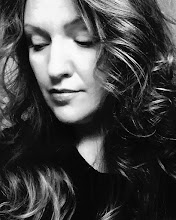
Lucy A. Snyder has writing chops that span a broad spectrum of genre styles. She is the author of the Jessie Shimmer urban fantasy series, which includes Spellbent, Shotgun Sorceress, Switchblade Goddess, and Orchid Carousals. She won a Bram Stoker Award in 2010 for her poetry collection Chimeric Machines, and she won another Stoker earlier this year for her short story “Magdala Amygdala”. Her book Sparks and Shadows won the 2008 Editor's Choice Black Quill Award for Best Dark Genre Collection, and her humor collection Installing Linux on a Dead Badger was released in 2007.


Hello again! For those of you participating in NaNoWriMo, I hope your projects are going well. It can be tough keeping up a novel-in-a-month pace, particularly if your narrative engine gets stuck in the mud and you have a hard time figuring out how to pull it free.

Which leads me to the question James posed as my topic for this post: what’s the most difficult part of a story? The beginning, middle, or end?

The answer to that question will vary widely depending on the writer and his or her particular fiction project. Most of us start writing a story or novel for a particular reason: we had a compelling nightmare, or we overheard a bit of dialog, or we read saw a story on the news and wondered “What if that had gone differently?” The numbers of things that can inspire a writer are practically endless; ideas are all around us.  But from those germinal ideas, characters or scenes will start forming in our minds, and soon our fingers are on the pen or keyboard and we’re writing.

The problem is, rarely do we have a story come to us fully formed. Bits are usually missing. Important bits.

Do you have an idea for a sympathetic, fun protagonist and an equally fun but rather twisted antagonist, and you know that they start fighting over a stolen relic in an abandoned warehouse, but … you’re not sure what needs to happen after that? Or why? In this situation, your ending might confound you.

Conversely, do you have an idea for a dramatic, epic final battle between the hero and the antagonist … but no idea how they first encountered each other? Or, possibly worse, you know exactly how the two first tangled but they’ve been enemies for decades and they have an immense amount of backstory together … and now you just don’t know where this particular story starts, exactly?  Chances are good the beginning of your story will be a bit of a problem.

But maybe you know exactly how their current conflict began. You know how the fight in the warehouse will go and what will happen in that epic final battle … but all the narrative that has to happen in chapters 3 to 9 is a bit hazy to you, and perhaps you’re even a little bored waiting to get to the good stuff? Your novel’s middle might sag like an undercooked pumpkin pie.

So, all three aspects of a narrative can be difficult … but if you pinned me down and told me I had to choose one, I’d pick the beginning of a story as being the most important challenge a writer has to overcome.

Why? First and foremost, if you don’t find a good point of entry for your story, you might never get it written! When I was a newbie writer in my late teens and early twenties, I would start a story based on a single cool idea, and I’d get a page or two in and completely run out of gas. Dozens of dried-up story sprouts littered my hard drive. It was all a learning experience, of course; the most important thing I learned is that I’m a plotter and not a pantser. I don’t outline, but I do need to let a story roll around in my mind for a while and grow a bit before I try to put it on paper. I need to make myself a narrative map; if something more interesting comes along while I’m writing I’ll happily embrace the new destination, but for me to have no destination in mind at all? My narrative engine will stall out in the driveway.

Furthermore, if you start sending around a manuscript with a solid middle and a fabulous ending but a weak opening, the chances are good that the editor or agent won’t keep reading long enough to discover your story’s strengths. In my experience, you have to grab the reader’s attention right away -- not just in the first page but the first paragraph. Ideally, you should hook the reader with your first sentence.

The kind of story you’re writing will dictate what that first page and first paragraph should look like; for every rule put forth in fiction, you can find a writer who managed to break that rule to wonderful effect.

Having said that, if you’re having trouble with your openings, there are a few things you can try:

  • Try to begin at the beginning. This seems obvious, doesn’t it? But often, it isn’t, and figuring it out requires thinking hard about your overall story. What’s the event that sets everything else in motion? That’s a really good place to start your tale.
  • If you’re writing a short story, try to start it as close to the climax of your story as you possibly can. This may take some planning. Obviously, you’ll need to have an ending in mind. You can fill in back story later, as needed.
  • Avoid starting a story or novel with lots of static description. Unless you write truly beautiful prose, this is hard to pull off well.
  • Try to start with an action sequence or some kind of conflict like an argument.
  • If your story or novel isn’t action-oriented, start with something unusual or genuinely interesting happening. More than one editor has told me, “If the story starts with an ordinary person doing or talking about something boring, I don’t keep reading.”


And that last point leads to my own advice to myself when I find myself getting stuck in the middle or near the end of a manuscript. I ask myself, “What would be cool or interesting here? What unexpected thing could happen here to mix this up? Given the characters I’ve created and their wants and desires, what interesting, unexpected thing would make the most sense here?” And then I try to make that happen.

I hope you find these suggestions helpful. Keep writing, keep finishing, and get your work out there!


Monday, November 4, 2013

Setting: How Much Is Too Much?

With our Monday Word-Whore gallivanting around England, we have a special guest for you today.

Lucy Snyder has writing chops that spans a broad spectrum of genre styles. She is the author of the urban fantasy Spellbent series including: Spellbent, Shotgun Sorceress, and Switchblade Goddess, as well as Orchid Carousals featuring characters from the Spellbent series. She won a Bram Stoker Award in 2010 for her poetry collection Chimeric Machines. Her Sparks and Shadows won the 2008 Editor's Choice Black Quill Award for Best Dark Genre Collection, and her humor collection  How to Install Linux on a Dead Badger was released in 2007.

Setting: How Much Is Too Much?
by Lucy A. Snyder

Hi everyone! I hope everybody had a fabulous Halloween last week!

Knowing that I think a whole lot about world building, James asked me to guest blog this week and talk a little bit about setting. More specifically, he asked me to talk about when a writer has focused too much on his or her setting.

There’s no cut-and-dried answer to the question of “How much setting is too much?” It depends on the type of story you’re telling. If you’re writing a lean, action-packed thriller set in the present day, all you need are a few vivid strokes and you’re off to the races:

The location was one of those sad old mansions in Bel Air. Ostentatious, but had seen better days. Money is so fickle here in L.A. and a big old house is like an aging mistress with a plastic surgery fetish. It’s more economical to just buy a cheap, flashy new one than keep on renovating the old one. Otherwise, you wind up renting the place out for porn shoots just to break even on the roofing bills.

There was a pair of twisted pomegranate trees guarding the open gate and the ground beneath them was gory with broken crimson fruit that crunched and splattered under the wheels of my little black Mini. Pulling into the wide circular driveway, I kept expecting to spot Norma Desmond burying her pet chimpanzee in the overgrown rose garden. I felt better once I saw Sam’s red ‘84 Corvette with its vanity plates that read HAMRXXX. It was parked near a massive wooden door that looked like it ought to open into a medieval Spanish dungeon. 
– from Money Shot by Christa Faust

Faust’s descriptions are vivid and as compact as the narrator’s Mini. She doesn’t spend time describing the shingles, or the windowpanes; she lets the reader fill in the rest because she knows most all of us have seen plenty of Hollywood mansions in movies or on TV. Instead, she focuses on the pomegranates, and in doing so creates great gruesomely foreboding imagery. Even better, she continues to build the narrator’s character as she describes the seedy world she works in.

But in some stories and novels, the setting is so crucial that it functionally serves as another character in the narrative. It could be a fantasy wonderland, an ancient house full of secrets, an astonishing spaceship, or a grim alien dystopia. In these cases, the reader will want to see the setting unfold before them and spend more time in compelling descriptions of structures and landscapes.

There was a wall. It did not look important. It was built of uncut rocks roughly mortared. An adult could look right over it, and even a child could climb it. Where it crossed the roadway, instead of having a gate it degenerated into mere geometry, a line, an, idea of boundary. But the idea was real. It was important. For seven generations there had been nothing in the world more important than that wall.
Like all walls it was ambiguous, two-faced. What was inside it and what was outside it depended upon which side of it you were on.
Looked at from one side, the wall enclosed a barren sixty-acre field called the Port of Anarres. On the field there were a couple of large gantry cranes, a rocket pad, three warehouses, a truck garage, and a dormitory. The dormitory looked durable, grimy, and mournful; it had no gardens, no children; plainly nobody lived there or was even meant to stay there long. It was in fact a quarantine. The wall shut in not only the landing field but also the ships that came down out of space, and the men that came on the ships, and the worlds they came from, and the rest of the universe. It enclosed the universe, leaving Anarres outside, free.
Looked at from the other side, the wall enclosed Anarres: the whole planet was inside it, a great prison camp, cut off from other worlds and other men, in quarantine.
             – from The Dispossessed by Ursula K. Le Guin


Le Guin spends more words describing a wall than Faust spends describing an entire mansion. But she’s not merely describing the wall, is she? She’s using it to convey the isolated culture the characters live in.

Your setting must above all else serve your story. And if you look at the two examples above, you soon realize that good descriptions of setting keep the story flowing. You don’t just drop everything for the sake of pages of static description; adept writers maintain narrative momentum whether the setting is briefly described or lovingly detailed.

So, what’s too much? Boring is too much. Keep it interesting, and keep it moving.


       For more on Lucy see her website: http://www.sff.net/people/lucy-snyder/

Wednesday, June 5, 2013

A Writer’s Quick Guide to Attending Conventions

Hey, it's Wednesday, and I should be posting, but as I considered the topic, I knew a writer pal of mine really had more experience and guidance on the topic to share, so I asked her if she would be my guest, and she accepted. So, kind readers, please welcome the amazing and wonderful and award-winning LUCY SNYDER. (check out her links, too!)

A Writer’s Quick Guide to Attending Conventions
A guest blog post by Lucy A. Snyder

Why should a writer attend a conference or convention?

There are a whole lot of reasons to go to a conference or convention. Many people go for fun as much as they do for business. It really depends on where you are in your writing career.

If you’re new to publishing, you might want to focus on conventions like Context that offer a strong writing track and the chance to talk to small- and medium-press editors, who are often more receptive to new writers’ work. Steer clear of conventions that mainly focus on costuming or media; they can be fun, but they’re not so good for networking. Look for conventions that offer publisher-sponsored parties, teas, and other events. They are prime opportunities to get to know people in the business.

If you have been selling short stories and have just finished a novel, look for conventions that offer the opportunity to pitch to book editors and reputable literary agents. While you can make good contacts at regional conventions, be wary of the agents featured at smaller conferences. Some convention organizers don't do a good job of distinguishing between genuine professional agents and well-intentioned amateurs (or worse, scam artists).

And if you’re a working writer, you’ll probably be looking for larger conventions that offer the best networking opportunities with editors and other writers as well as a chance to expose new readers to your work.

How do you make a good impression at a convention?

First, focus on the fundamentals. Smile. Be pleasant. Make sure you and your clothes are clean and in good condition. Get some sleep. Don't emit a strong odor, be it bad breath or expensive cologne.

Wear the kind of clothes the other pros will be wearing. This will be business attire at most romance conferences, business or dressy casual at literary conferences, but it can be a casual shirt and jeans at an SF or horror convention.

Carry some attractive business cards, but keep them in your pocket until a new acquaintance asks how he or she can contact you. Be yourself and have fun, but don't show up for your pitch session wearing your entry for the costume contest (especially if you're going as Barney the Dinosaur).

If you've chosen writing as a profession or avocation, the chances are high that you're an introvert. Shy, even. Maybe the thought of going up to strangers fills you with anything from dread to panic.

Take a deep breath. Calm down. Networking isn't that bad, and like most other things, it's a learnable skill. All those editors and writers and agents you want to meet? Many of them are introverts, too. And while they're doing business, they're pretending to be extroverts, with varying degrees of success. (So keep this in mind if people seem weird. They're probably just trying too hard.)

Once you've pushed yourself past your comfort zone, your sense of social depth perception can suffer, and it's easy to inadvertently come on too strong and annoy the person you're talking to. Be mindful of personal space and avoid off-color remarks and jokes. Your risk of making a bad impression increases a thousand percent if you're drunk or flying high on your third Red Bull, so when you're in the bar and you want to do business, it's best to stick to tea or soda.

But by all means, if the editor's glass is dry and she's looking longingly at the martini menu, offer to buy her a drink.

Don't pitch your book at people unless you're in an actual pitch session. You're not looking to corner an editor, you're looking for a conversation; if you're doing all the talking, you're probably doing it wrong.

The best way to be interesting is to be interested. Ask the editor about her ongoing projects (provided she didn't just discuss them in detail at the Q&A panel you skipped out on). But don't make her feel she’s being grilled or being asked too-personal questions; the worst thing you can do is to come off as a potential stalker.

But if things go well, you can have talks that give you valuable information about who's looking to buy what (and who you perhaps shouldn't submit to). Furthermore, a good conversation with an editor or fellow author will make you feel energized and excited about your writing prospects. And the very best conversations may be the start of new lifelong friendships.

If you’re pitching a book to an agent or editor at a convention, what do you need to do?

Make sure you know the rules of the pitch session going in, and make sure you’re following those rules. If you find out who you’ll be pitching to ahead of tme, try to learn a little about the agent or editor and his or her tastes, and adjust your pitch accordingly.

Practice your pitch on friends, and prepare pitches of different lengths. For instance, it’s always good to be able to describe your project in 30 seconds or less, but you’ll also want an intermediate and longer pitch that you can use depending on the circumstances. And it doesn’t hurt to have a back-up pitch prepared in case the agent or editor says “I don’t think that project will work for us, but do you have anything else?”


Lucy A. Snyder is the Bram Stoker Award-winning author of the novels Spellbent, Shotgun Sorceress, Switchblade Goddess, and the collections Sparks and Shadows, Chimeric Machines, and Installing Linux on a Dead Badger. Her writing has appeared in Strange Horizons, Weird Tales, Hellbound Hearts, Chiaroscuro, GUD, and Lady Churchill's Rosebud Wristlet. For more about her, visit www.lucysnyder.com.